Available heating options
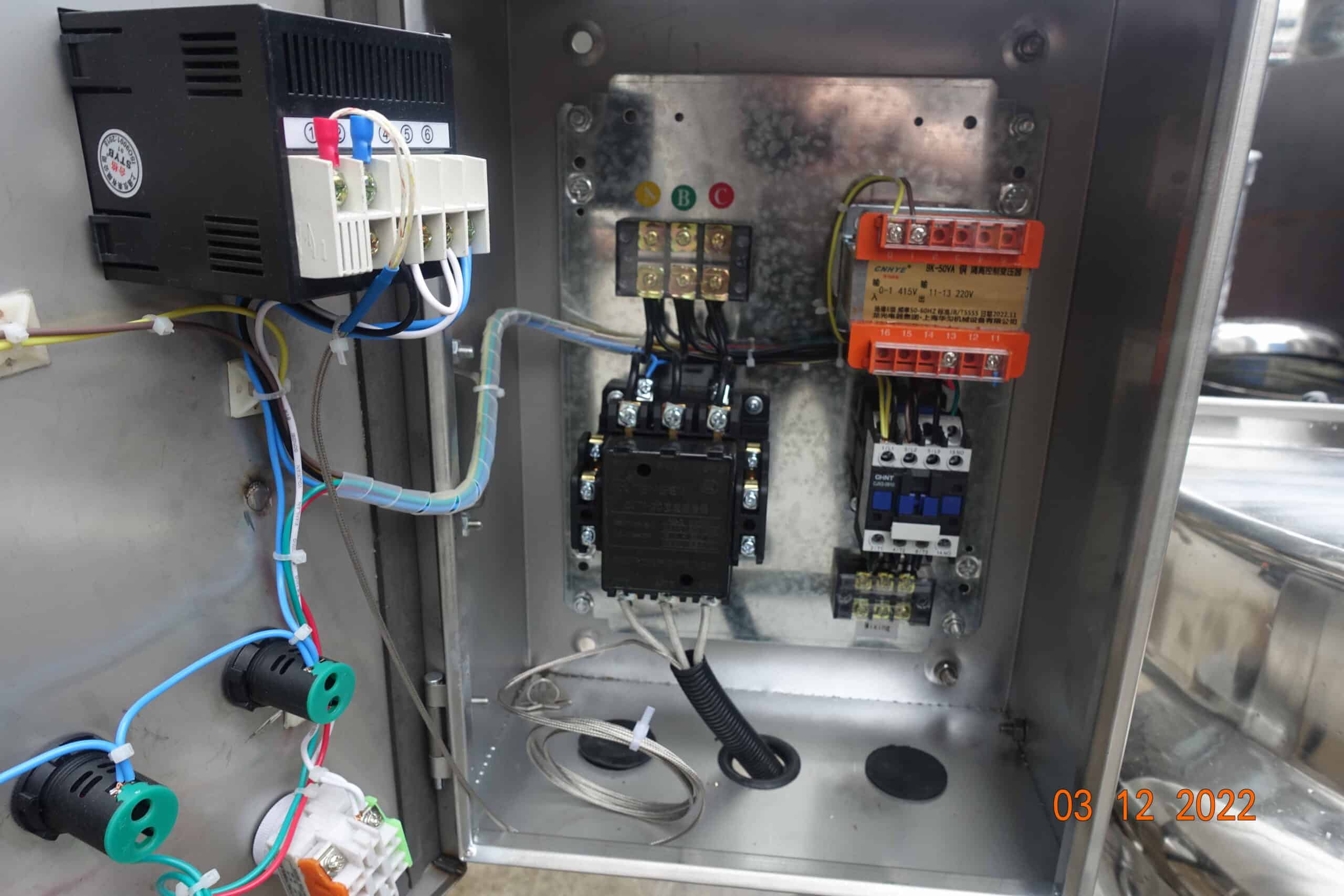
Electric heating
The electric system offers more stable temperature control and less thermal variation during long cycles. It is a good solution for products sensitive to burning, especially mixtures with sugar, milk, or starches.
However, in many small factories, the actual electrical consumption is underestimated. A 200-liter kettle operating continuously can require considerable electrical infrastructure, especially during cold starts.
- Precise thermal control
- Lower environmental contamination
- Relatively simple installation
- Higher energy cost in some countries
Gas heating
Gas heating remains widely used due to its thermal response speed and lower operating cost in certain regions. It works well for intensive productions where thermal recovery time is important.
The problem arises when the operator does not properly control heat distribution. In viscous products, the risk of caramelization or sticking to the bottom increases significantly if adequate agitation is not present.
- Rapid heating
- Low operating cost
- Periodic burner maintenance
- Higher ventilation and safety requirements
Steam heating
In plants with a central boiler, steam is usually the most efficient option. Heating is uniform and reduces hot spots compared to direct fire.
Many buyers believe that steam is always cheaper. Not necessarily. If the plant lacks stable generation infrastructure, the initial investment can be considerable.
- Uniform heat transfer
- Ideal for continuous production
- Lower risk of burning
- Requires boiler system and pressure control
Manufacturing material: stainless steel 304 and 316L
Most food applications work properly with stainless steel 304. It has good mechanical resistance and acceptable behavior against moisture, standard chemical cleaning, and common working temperatures.
Stainless steel 316L is recommended when there is a high presence of salt, acidic products, or aggressive CIP cleaning processes. In sauce plants, seafood products, or chemical formulations, 316L usually significantly extends the tank's service life.
In practice, many customers pay for 316L without really needing it. This happens frequently. The correct material depends more on the processed product and cleaning protocol than on the steel's prestige.
Important mechanical aspects
Agitation system
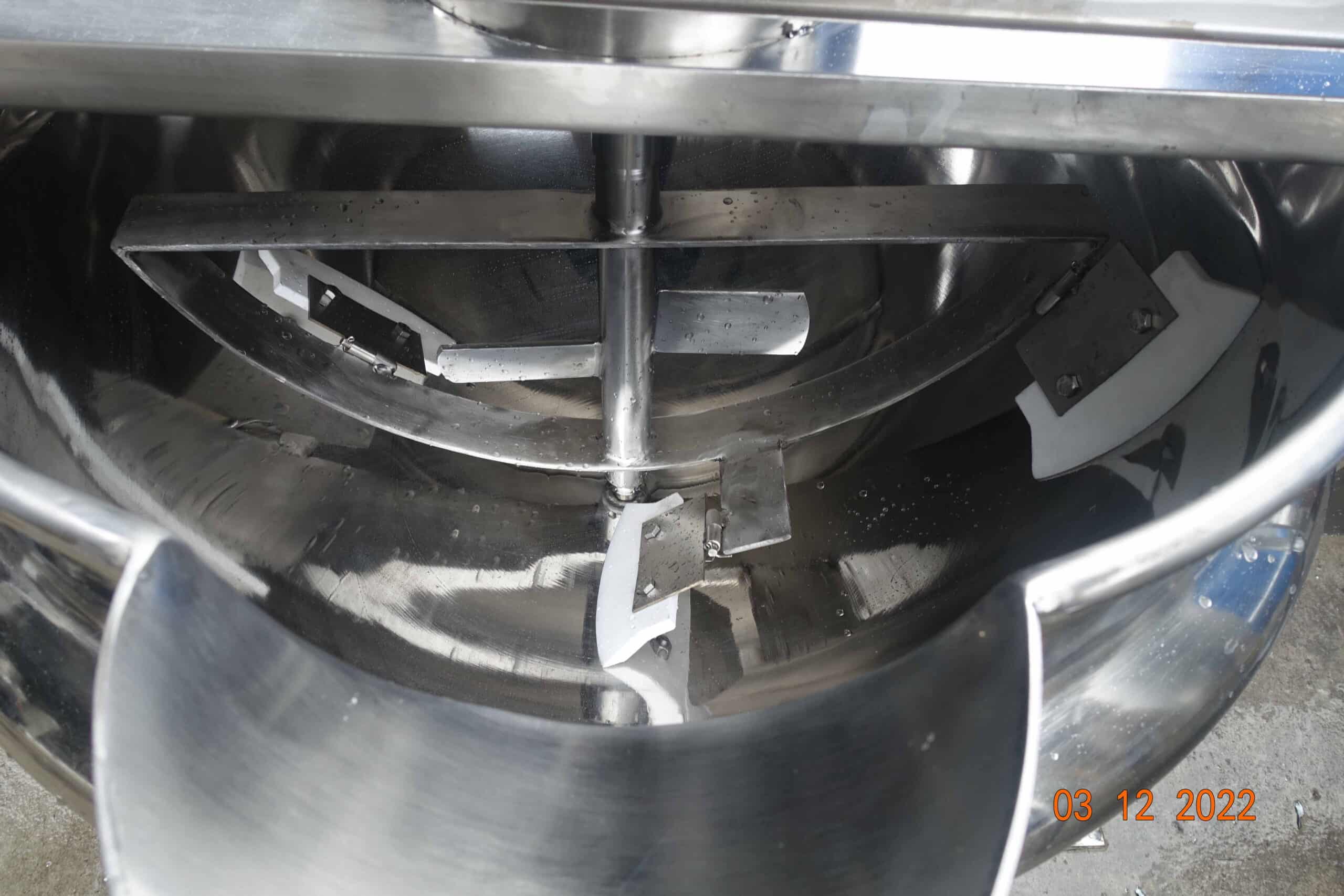
Agitation is more important than many buyers initially consider. Poor paddle configuration can completely ruin heat transfer.
For viscous products, scraper-type agitators are usually used to reduce buildup on internal walls. In low-viscosity liquids, a standard propeller is usually sufficient.
Tank thickness
Some manufacturers reduce costs by using excessively low thicknesses in the thermal jacket or main body. The problem appears after several thermal cycles, when slight deformations or microcracks near welds begin.
Well-polished internal welds facilitate cleaning and reduce bacterial buildup. It is worth checking this before purchasing.
Common operational problems
- Product burning due to poor thermal distribution
- Leaks in mechanical seals of the agitator
- Residue buildup in welding areas
- Incorrect temperature readings due to poorly calibrated sensors
- Overpressure in steam systems without preventive maintenance
Most of these failures do not stem from the original design but from insufficient maintenance or incorrect selection of the heating system.
Maintenance and cleaning
Industrial kettles require periodic inspection of valves, bearings, reducers, and sealing systems. In daily work equipment, wear appears earlier in mechanical components than in the stainless steel tank.
In food plants, internal cleaning must be carried out immediately after production. When the product dries inside the tank, cleaning time can double.
It is also advisable to periodically check:
- Condition of seals and gaskets
- Operation of the agitation system
- Working pressure in steam models
- Condition of electric resistors or burners
- Calibration of temperature controllers
Considerations before purchasing
Many buyers focus solely on capacity. In reality, the type of product processed defines almost everything: agitation speed, thermal power, stainless material, and discharge design.
Another common mistake is choosing excessive power thinking it will heat faster. In delicate products, too much thermal power causes texture and final quality problems.
A well-configured industrial kettle normally operates for years with basic maintenance. But incorrect selection usually causes problems from the first months of operation.