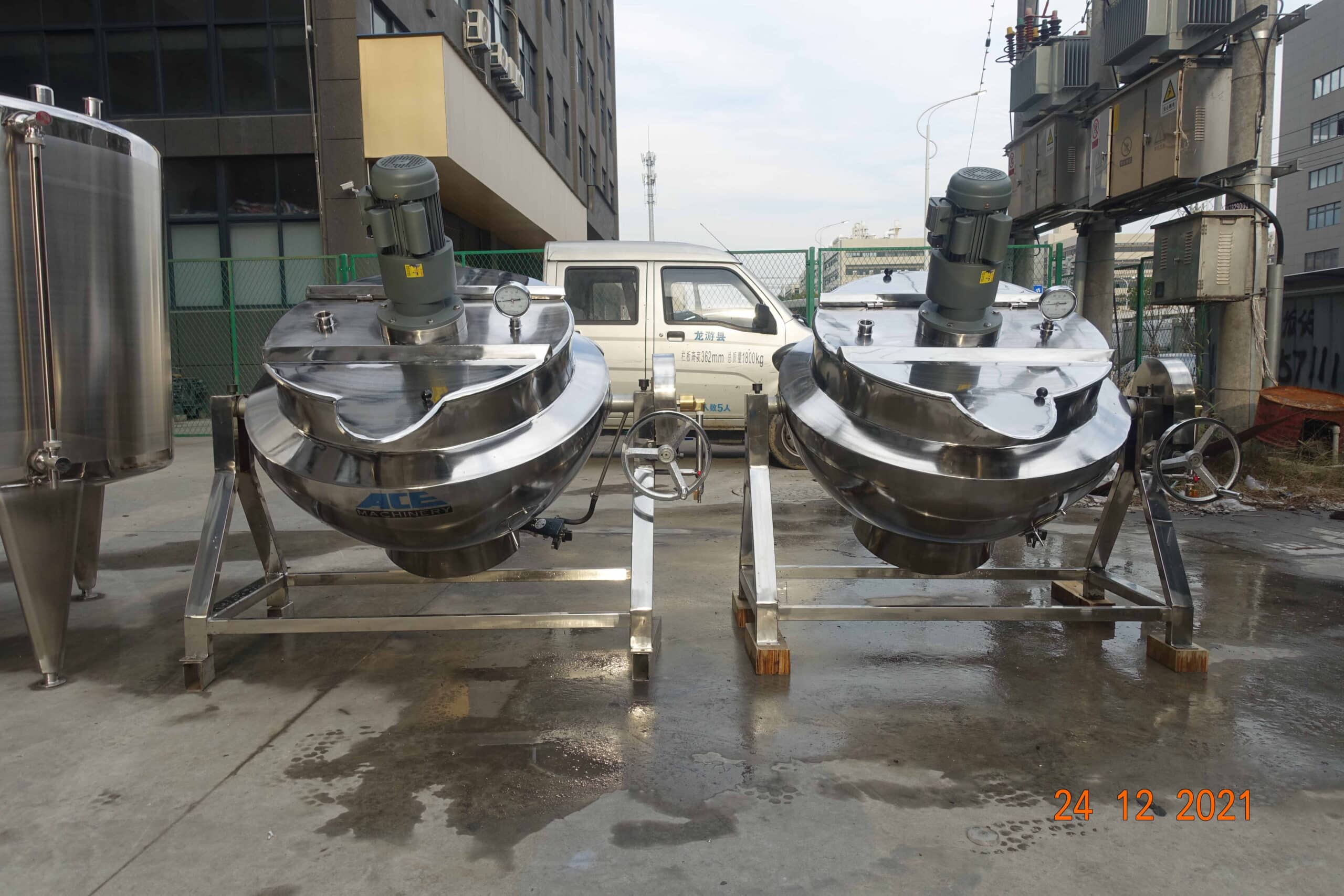
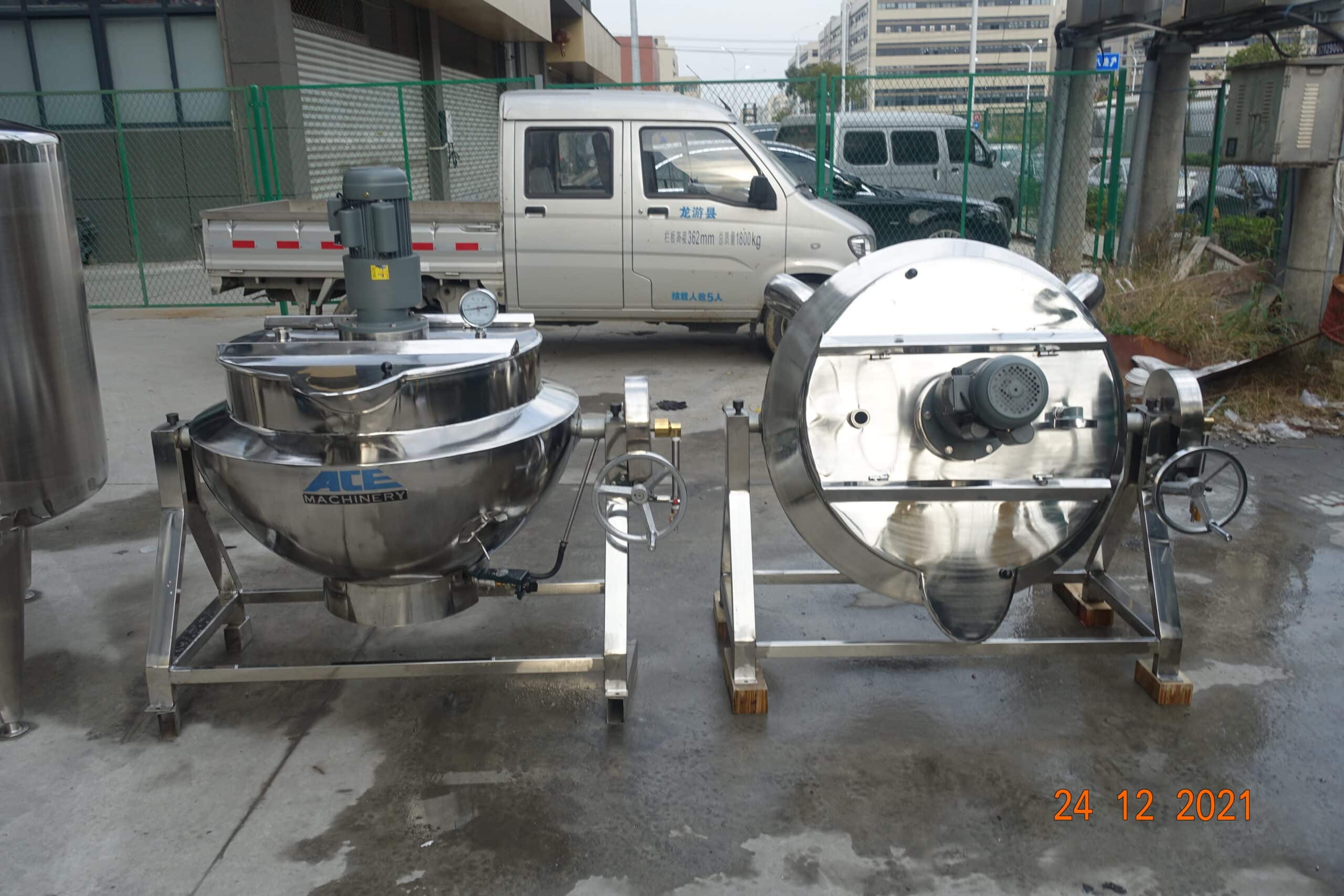
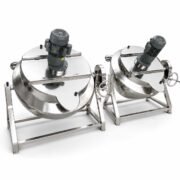
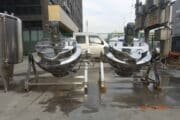
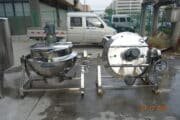
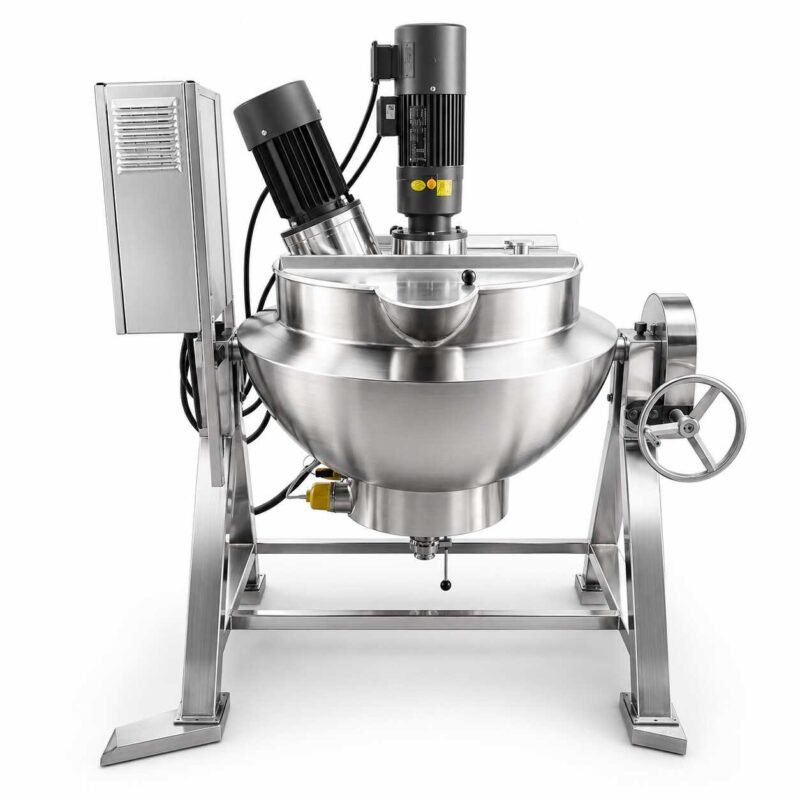
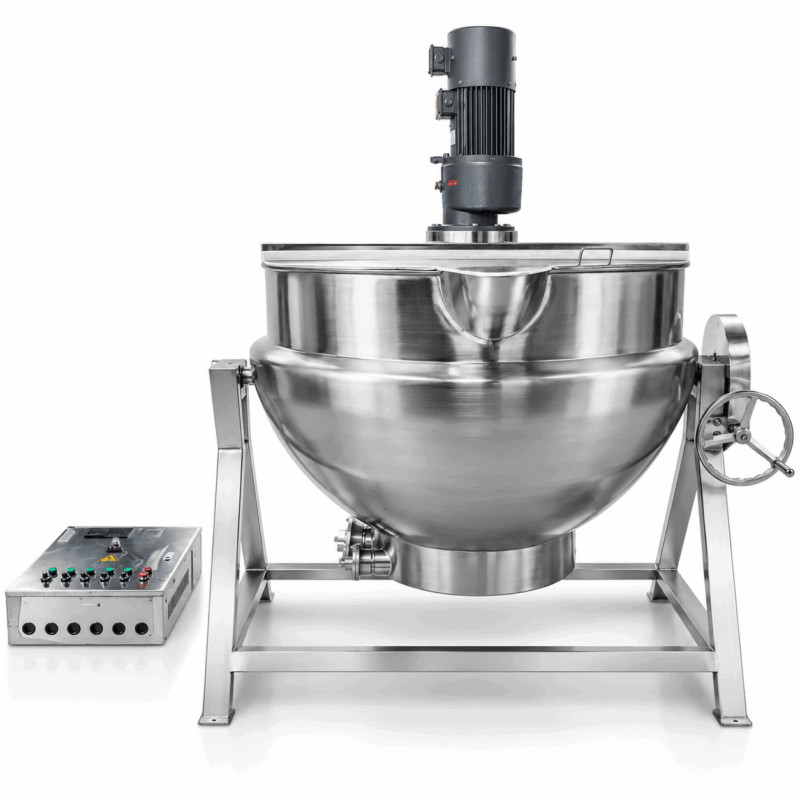
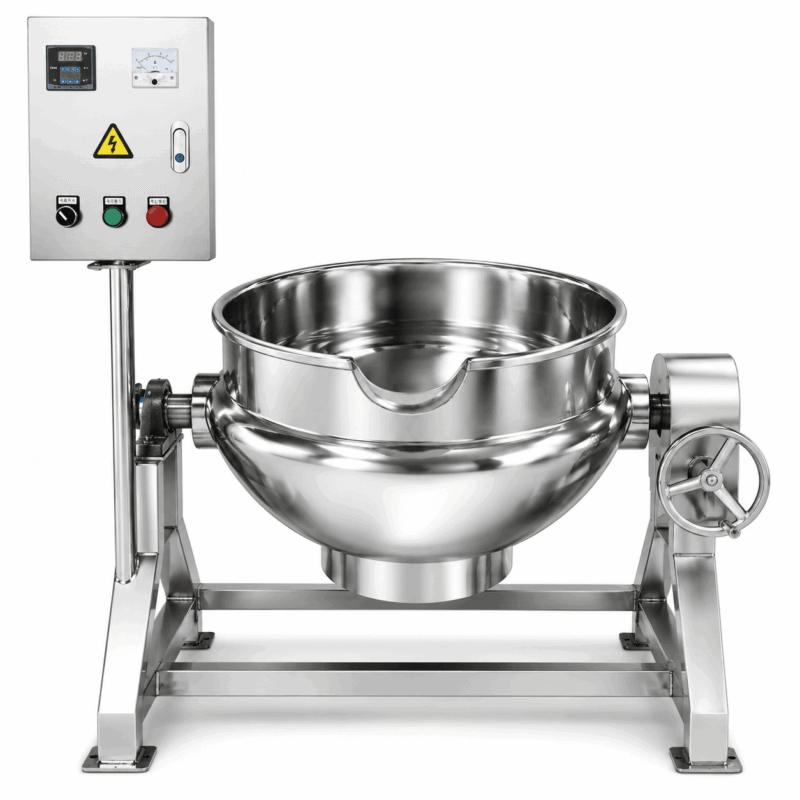
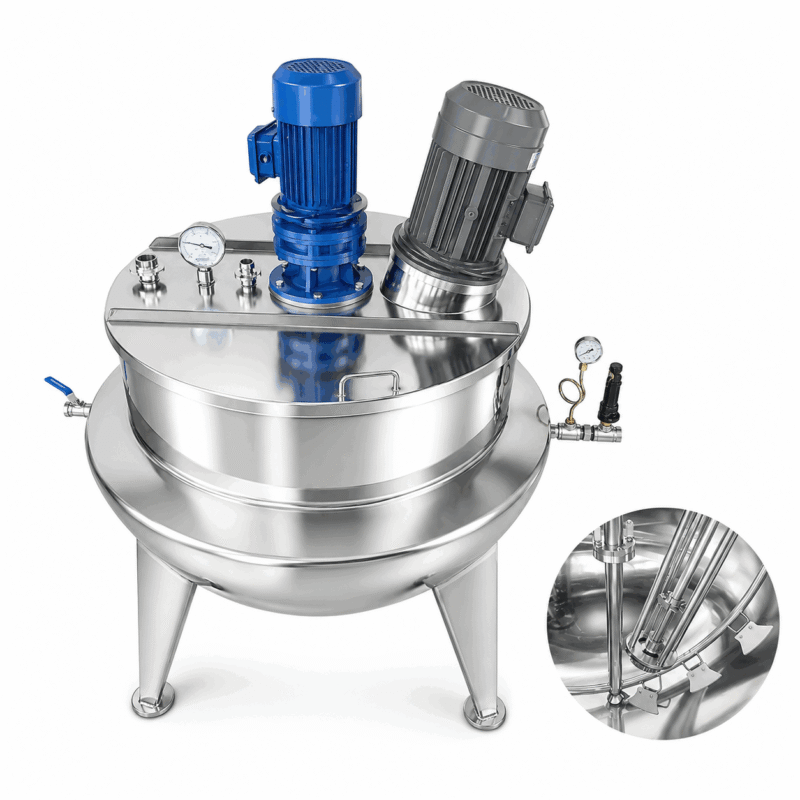
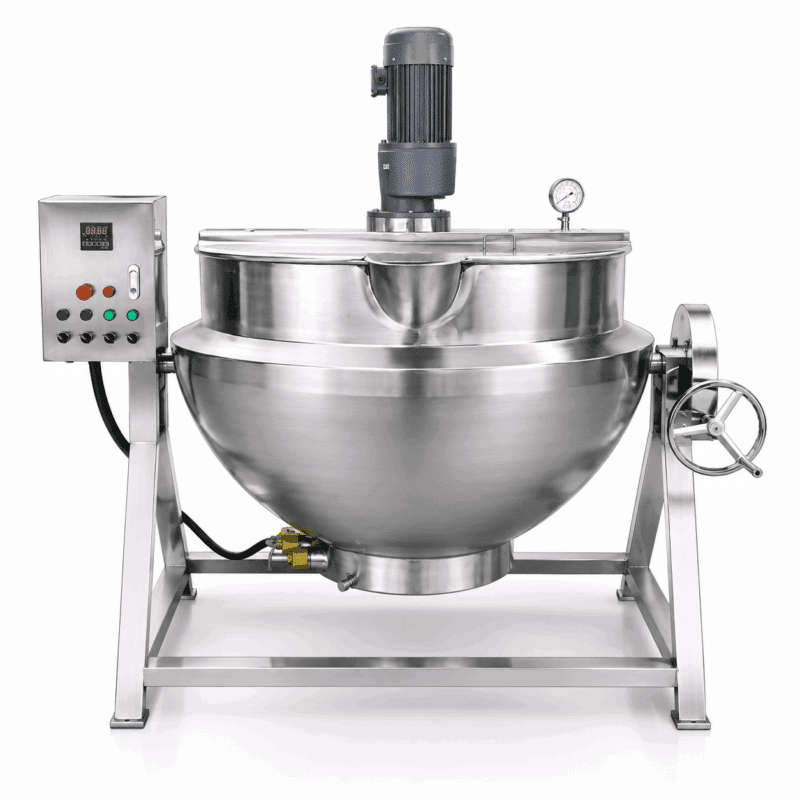
Real applications in the plant
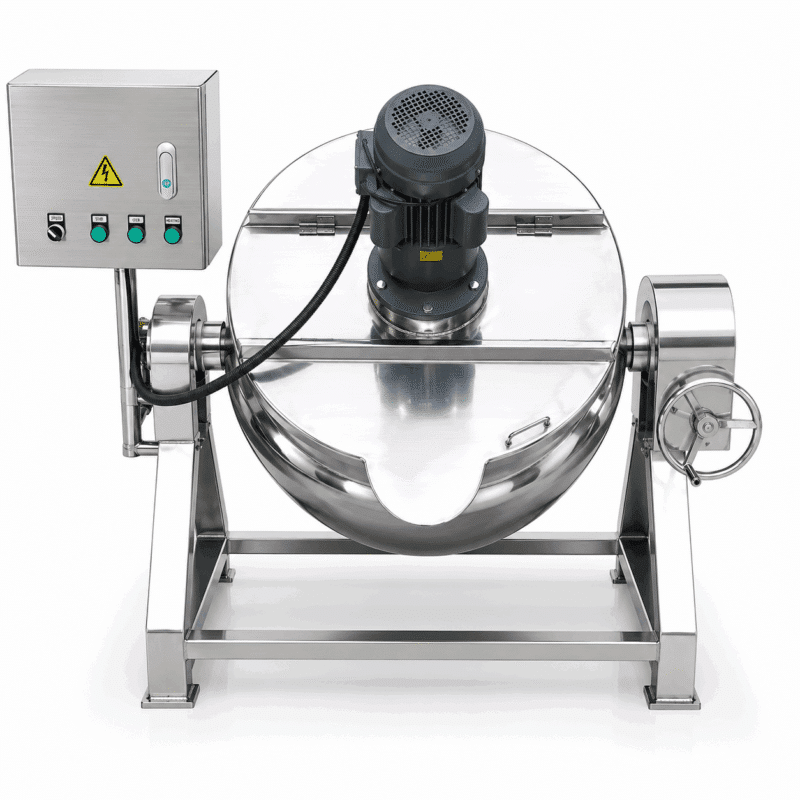
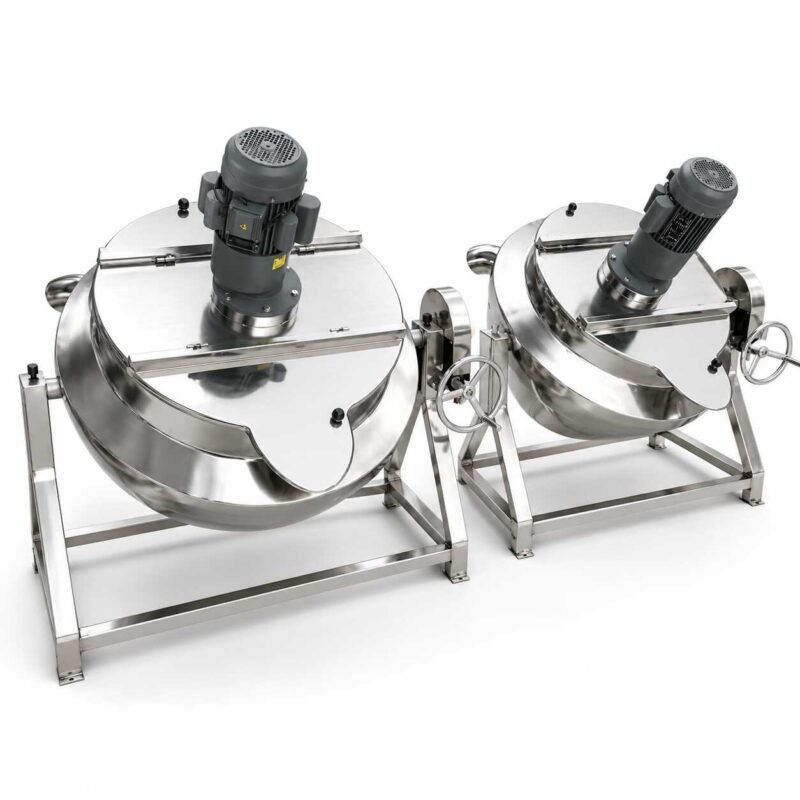
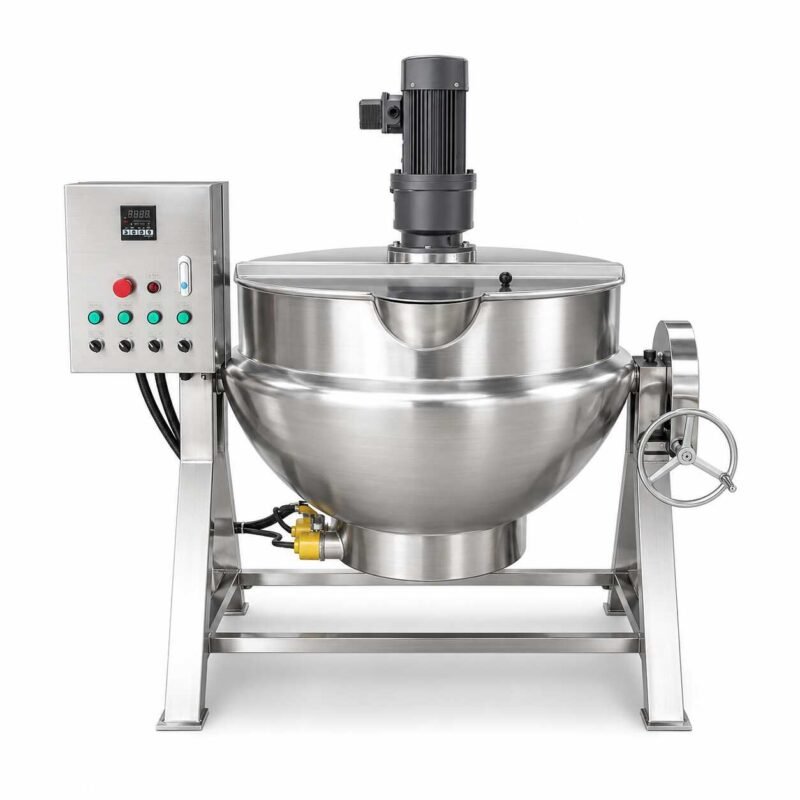
In production lines, an industrial kettle is not used just for “cooking”. It is used to control heat transfer, homogeneity, and batch repeatability.
- Preparation of sauces, jams, syrups, fillings, creams, and soups.
- Dissolution of sugar, salt, thickeners, gelling agents, or powdered ingredients.
- Pasteurization of liquid or semi-liquid products.
- Melting of fats, waxes, cosmetic bases, or viscous mixtures.
- Partial concentration by controlled evaporation.
- Preparation of emulsions, detergent bases, and mild chemical formulations.
In products with suspended solids or high sugar content, agitation and bottom design are as important as thermal power. More heat does not always improve the process. Sometimes it just burns faster.
Heating options: gas, steam, and electric
Gas heating
The gas kettle is practical when the plant seeks boiler independence or when the cost of gas is competitive compared to electricity. It has good thermal response and is usually attractive in medium and large capacities. However, it requires proper gas evacuation, stable pressure regulation, well-calibrated burners, and reliable safety controls.
El punto crítico es la uniformidad. Si la llama concentra demasiado calor en una zona, aparecen puntos calientes, caramelización no deseada o producto adherido. En equipos serios, el diseño de la cámara de combustión, el aislamiento y la geometría de transferencia importan más que la potencia anunciada.
Steam heating
El vapor es la opción más estable para plantas con caldera disponible. Permite una transferencia térmica suave, uniforme y fácil de controlar, especialmente en procesos sensibles. Para producción continua o lotes repetitivos, suele ser la alternativa más profesional.
Su desventaja es evidente: necesita infraestructura. Válvulas, trampas de vapor, líneas correctamente dimensionadas, retorno de condensado y mantenimiento de caldera. Cuando todo está bien instalado, trabaja muy bien. Cuando no, aparecen golpes de ariete, baja eficiencia y variaciones de temperatura difíciles de explicar al operador.
Electric heating
El calentamiento eléctrico es limpio, compacto y fácil de instalar en capacidades pequeñas o medianas. Funciona bien para laboratorios, plantas piloto o producciones donde no se justifica una línea de gas o vapor.
El límite suele estar en la potencia disponible y el costo energético. En marmitas grandes, una solución eléctrica puede requerir una instalación robusta y protecciones adecuadas. También hay que evitar que las resistencias trabajen con bajo nivel de producto o sin fluido térmico suficiente.
Materiales: acero inoxidable 304 o 316L
El acero inoxidable 304 es adecuado para la mayoría de procesos alimentarios estándar: salsas, jarabes, sopas, lácteos no altamente corrosivos y productos de limpieza moderada. Es económico, resistente y fácil de mantener.
El 316L se recomienda cuando hay cloruros, formulaciones ácidas, productos salinos, cosméticos agresivos o protocolos de limpieza más exigentes. No es una mejora decorativa; es una decisión de compatibilidad química. Muchos compradores piden 316L pensando que siempre es “mejor”, pero si el proceso no lo necesita, el sobrecosto puede no aportar valor real.
Capacidades disponibles: de 50 a 1.000 litros
Las marmitas industriales se ofrecen en capacidades desde 50 L, 100 L, 200 L, 300 L, 500 L hasta 1.000 L. La capacidad útil rara vez coincide con el volumen total. Para evitar derrames, formación excesiva de espuma o mala mezcla, normalmente se trabaja con un margen operativo.
Criterios prácticos de selección
- Define the actual volume per batch, not just the desired daily production.
- Consider heating time, thermal maintenance time, and discharge time.
- Assess whether the product increases in viscosity during the process.
- Check loading height, discharge, and cleaning for operators.
- Verify available energy: gas, steam, or electricity.
A common mistake is purchasing a kettle that is too large “to grow into.” For sensitive products, working at a low level inside an oversized tank can worsen heat transfer and agitation.
Agitation, bottom, and discharge
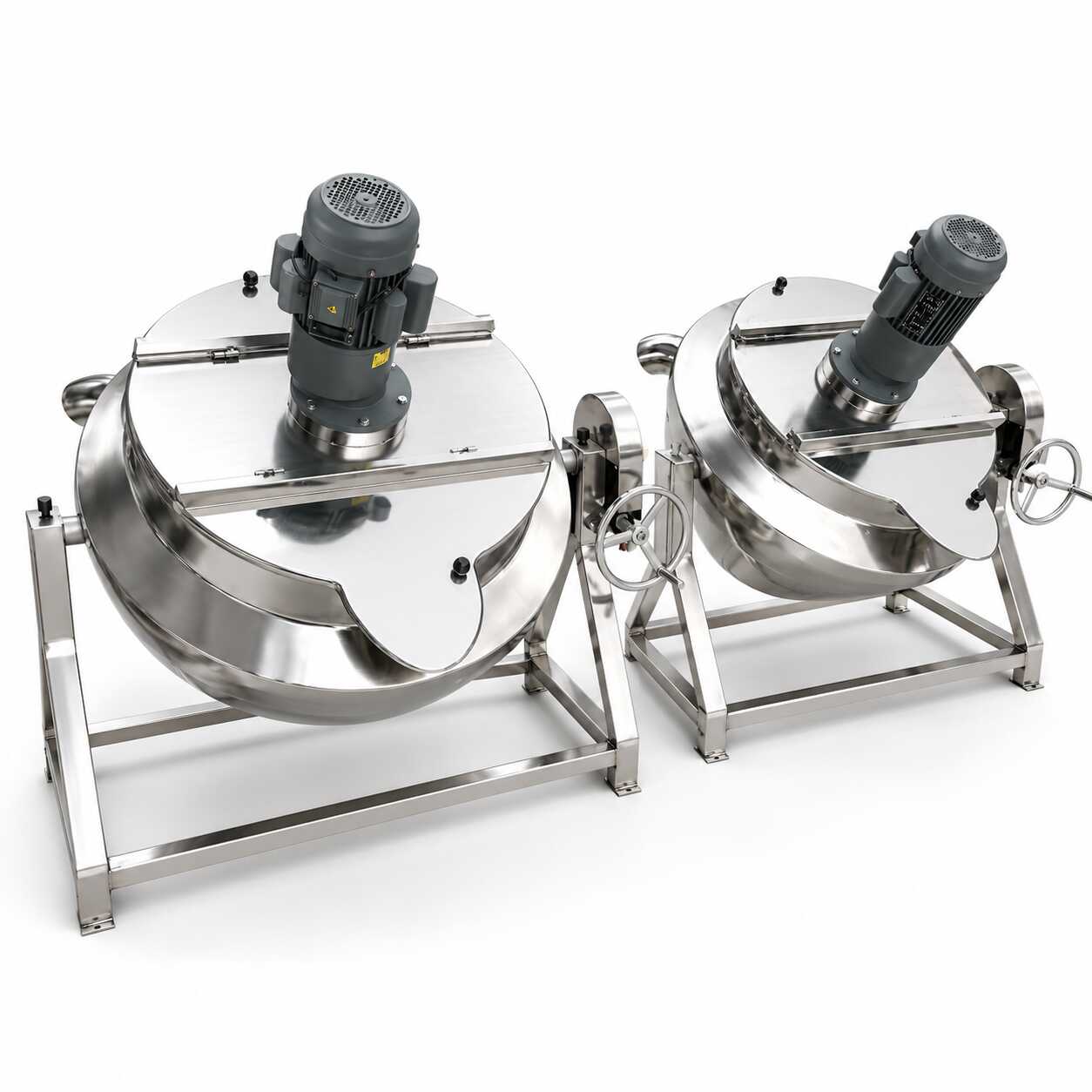
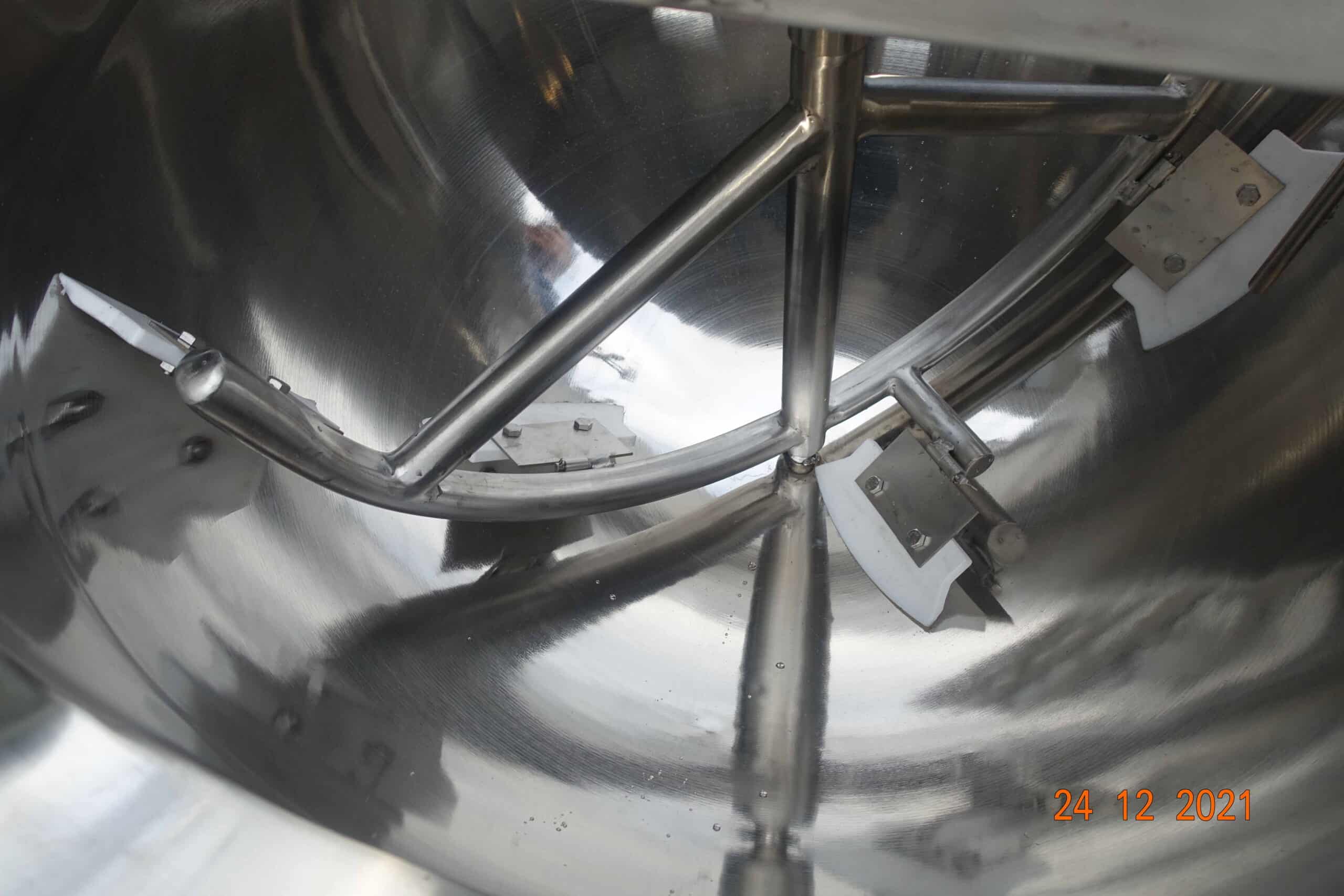
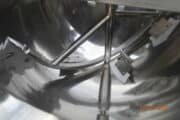
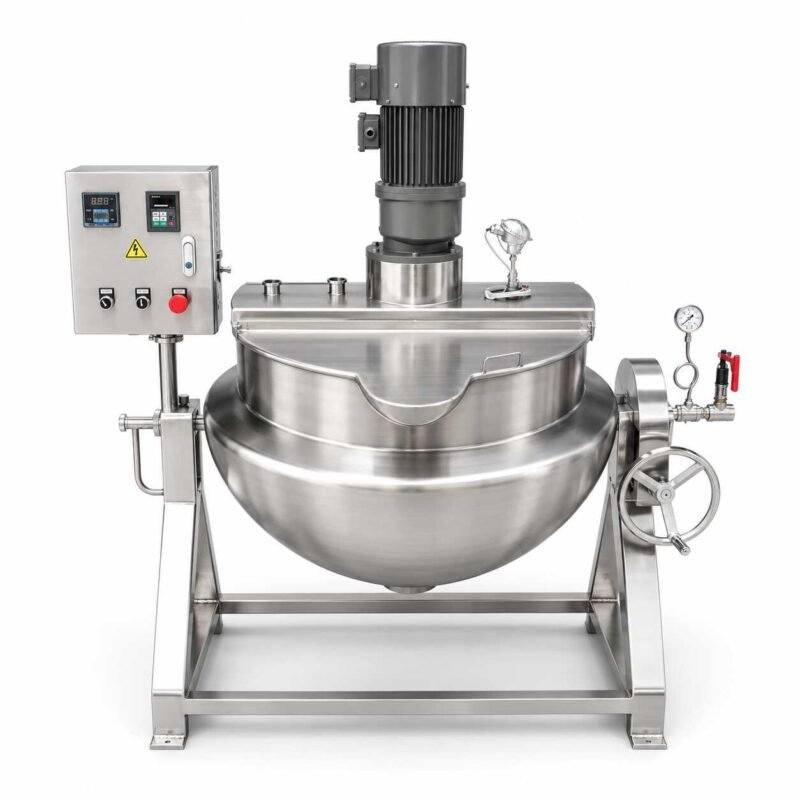
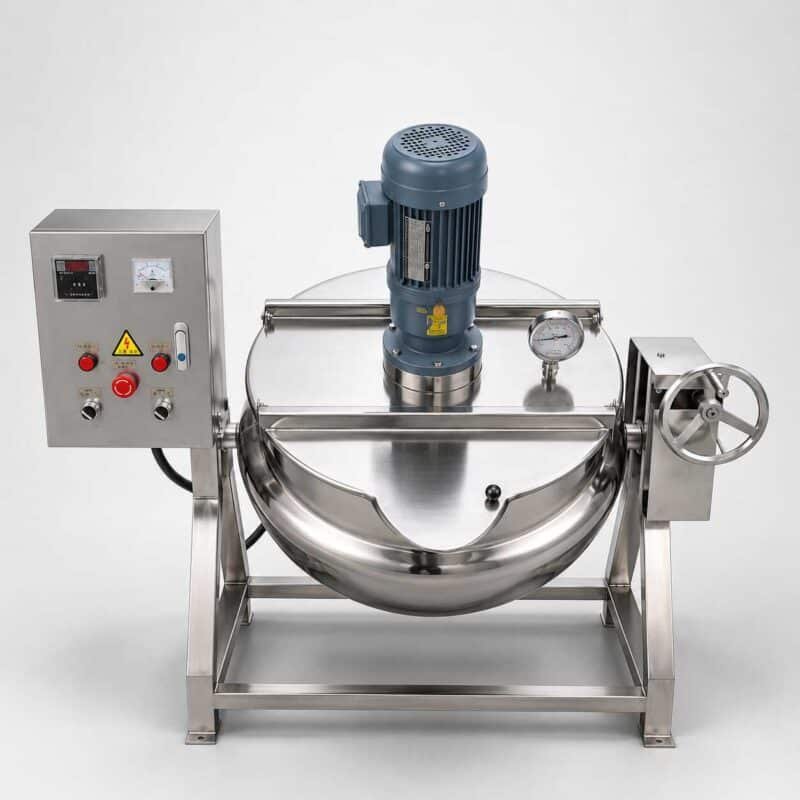
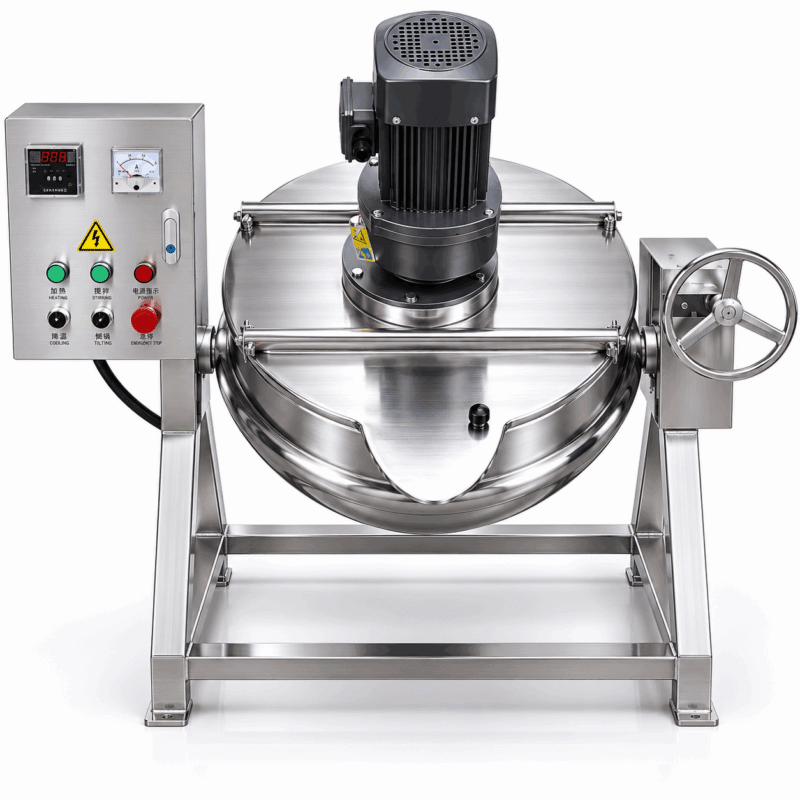
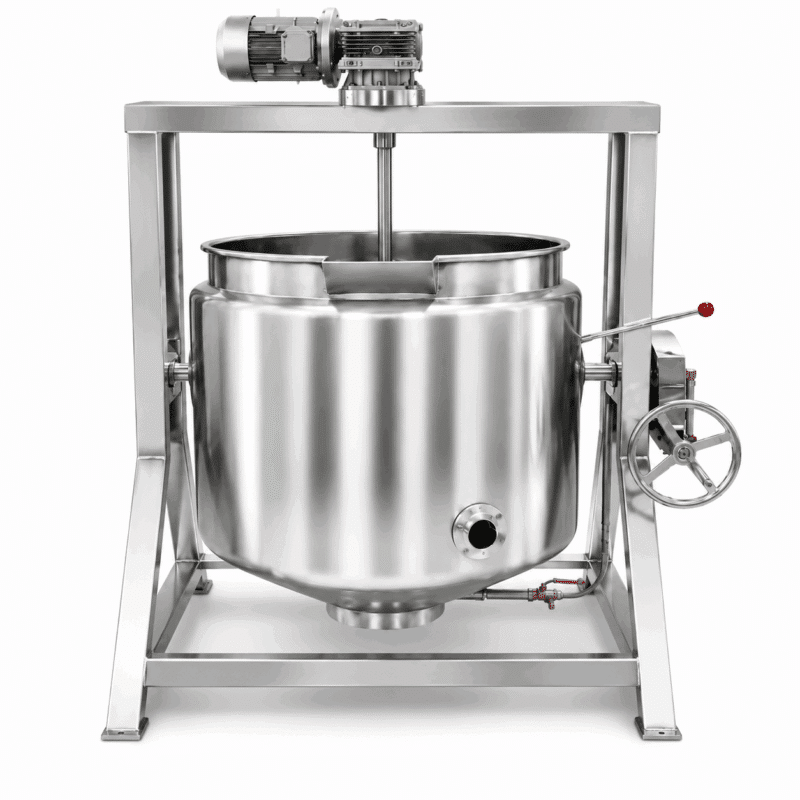
Agitation must be adapted to the product. For low-viscosity liquids, a simple paddle may suffice. For creams, dense sauces, or mixtures with particles, it is advisable to use anchor agitators, wall scrapers, or combinations with higher torque.
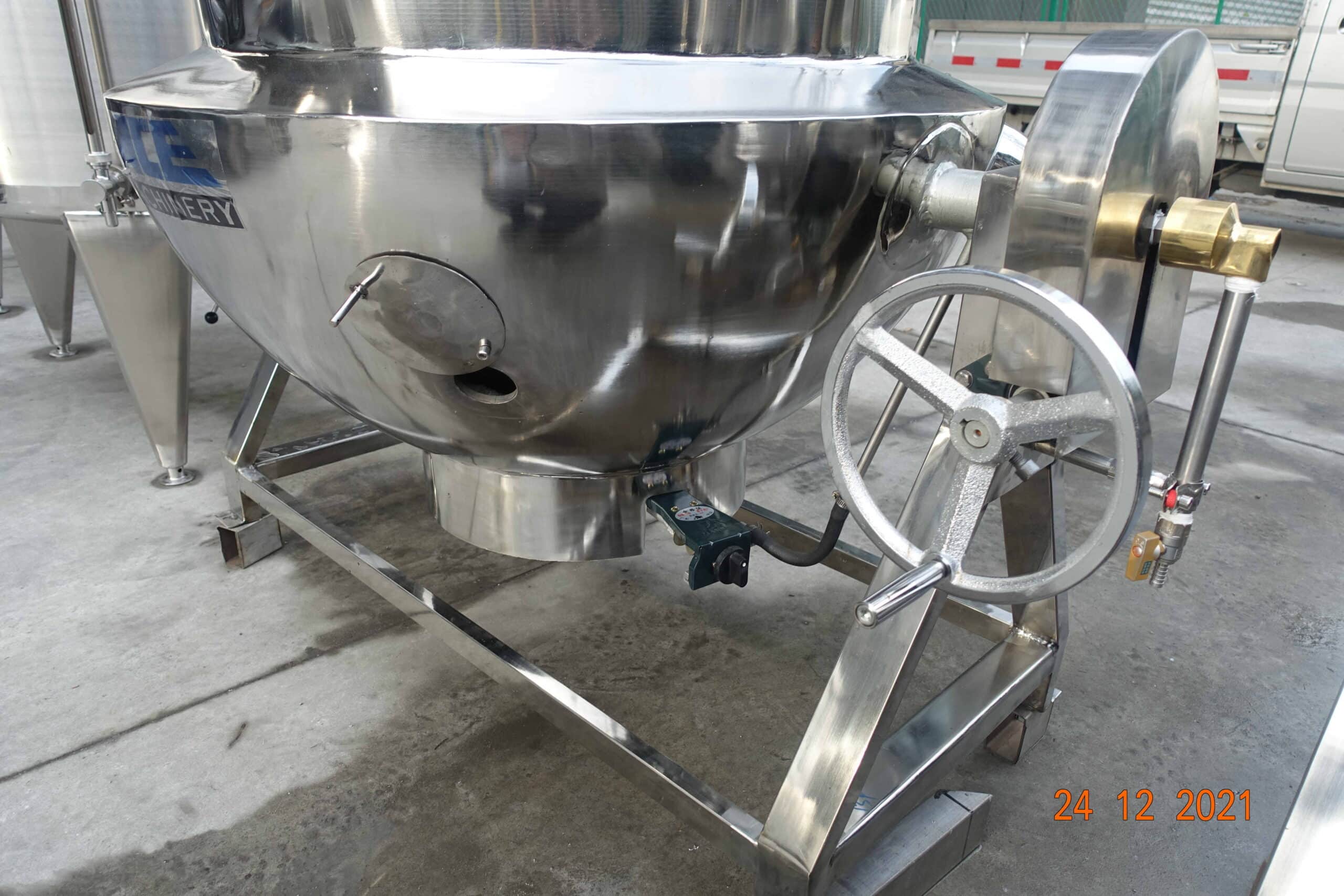
In actual production, the problem is usually not mixing water with sugar. The problem arises when the product begins to thicken, when the bottom receives more heat than the walls, or when the operator cannot fully discharge the batch. A design with a sanitary valve, proper inclination, or tilting system reduces losses and facilitates cleaning.
Common operational problems
Burned or stuck product
This may be due to excess power, insufficient agitation, poor heat distribution, or dead times during heating. For gas kettles, checking burner regulation is essential.
Unstable temperature
Occurs when the sensor is poorly located, the controller is not calibrated, or the energy source fluctuates. In steam, it may also indicate poorly evacuated condensate.
Slow cleaning
Poorly polished surfaces, difficult corners, non-sanitary valves, or complicated agitators increase cleaning time. This affects productivity more than many initial capacity calculations.
Overloaded agitator
If the product thickens at the end of the process, the motor may operate above its range. It is advisable to specify torque, not just power in kW.
Maintenance and inspection
A well-maintained industrial kettle can operate for years with few stoppages. But it requires routine. Cleaning the tank interior alone is not enough.
- Check seals, gaskets, and discharge connections.
- Inspect burners, nozzles, gas valves, and safety systems.
- Calibrate temperature sensors and controllers.
- Verify the condition of thermal insulation.
- Lubricate reducers according to the manufacturer's recommendation.
- Check the alignment of the agitator shaft and abnormal noises.
In equipment with steam or thermal oil jackets, pressure, leaks, traps, purges, and relief valves must also be monitored. Small ignored leaks eventually lead to costly shutdowns.
Common misunderstandings when purchasing a kettle
“More power means better equipment”
Not always. Power must be balanced with the transfer area, product viscosity, and type of agitation. Excessive power without fine control can damage the product.
“All stainless steel kettles are the same”
No. There are differences in thickness, weld quality, internal polishing, sanitary design, valve type, structural rigidity, and jacket finish. Two pieces of equipment may look similar but perform very differently in production.
“The nominal volume is the working volume”
In practice, no. Free space must be considered for foam, thermal expansion, agitation, and operational safety.
“316L is always necessary”
Only when the process justifies it. In many food applications, 304 works properly. In products with salt, strong acids, or aggressive cleaning, 316L can prevent premature corrosion.
Technical aspects to specify
- Total capacity and useful working capacity.
- Contact material: 304 or 316L.
- Type of heating: gas, electric, or steam.
- Working pressure in jacket, if applicable.
- Type of agitator and fixed or variable speed.
- Motor power and available torque.
- Internal finish and polishing grade.
- Type of discharge: bottom, side, or tilting.
- Instrumentation: thermometer, controller, safety valves.
- CIP cleaning requirements or manual cleaning.
Technical conclusion
A well-designed gas industrial kettle offers flexibility, good thermal capacity, and solid operation for many industrial processes. Still, the right decision does not depend solely on price or volume. It depends on the product, the available heating method, the required level of control, and how the equipment is cleaned at the end of the shift.
In a real plant, small details determine performance: an easy-to-disassemble valve, an agitator with sufficient torque, a well-placed sensor, a properly designed jacket. That is what separates a kettle that only heats from a kettle that produces steadily.