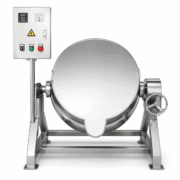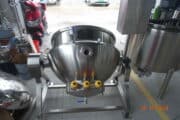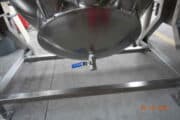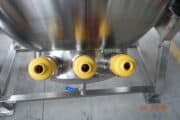
Common applications in the plant
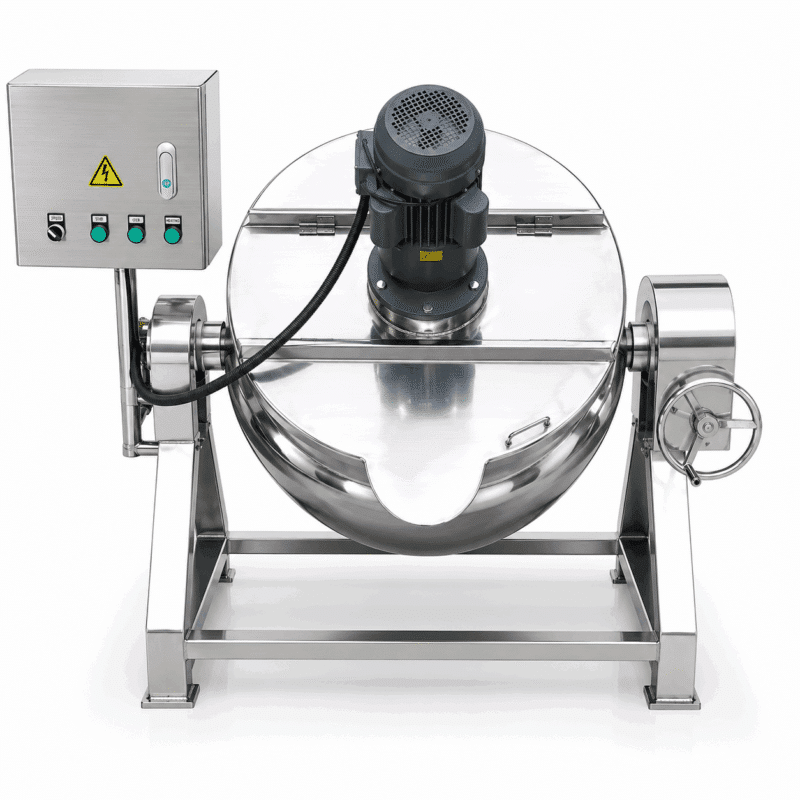
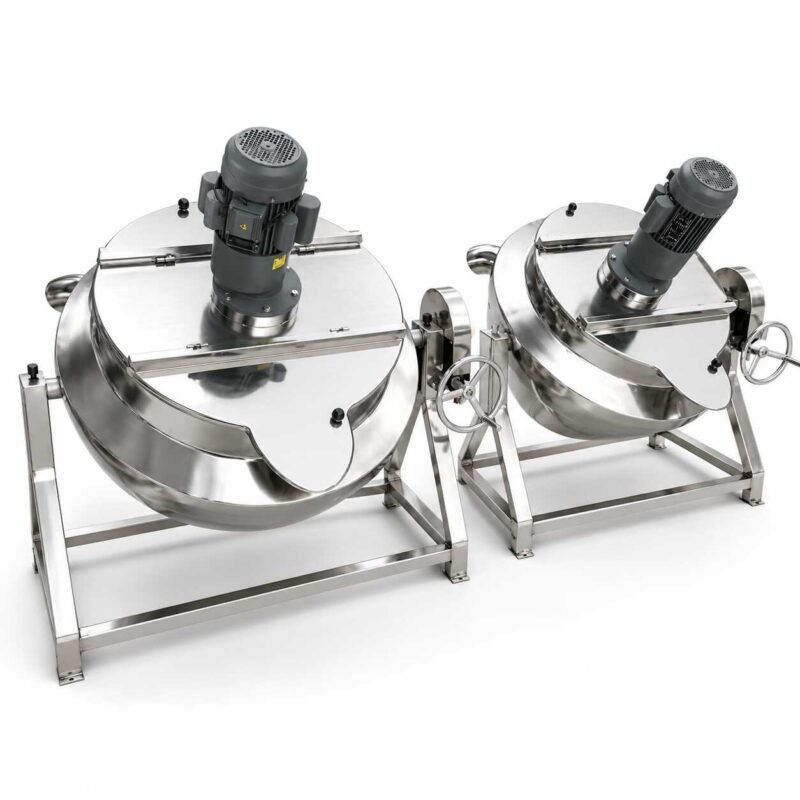
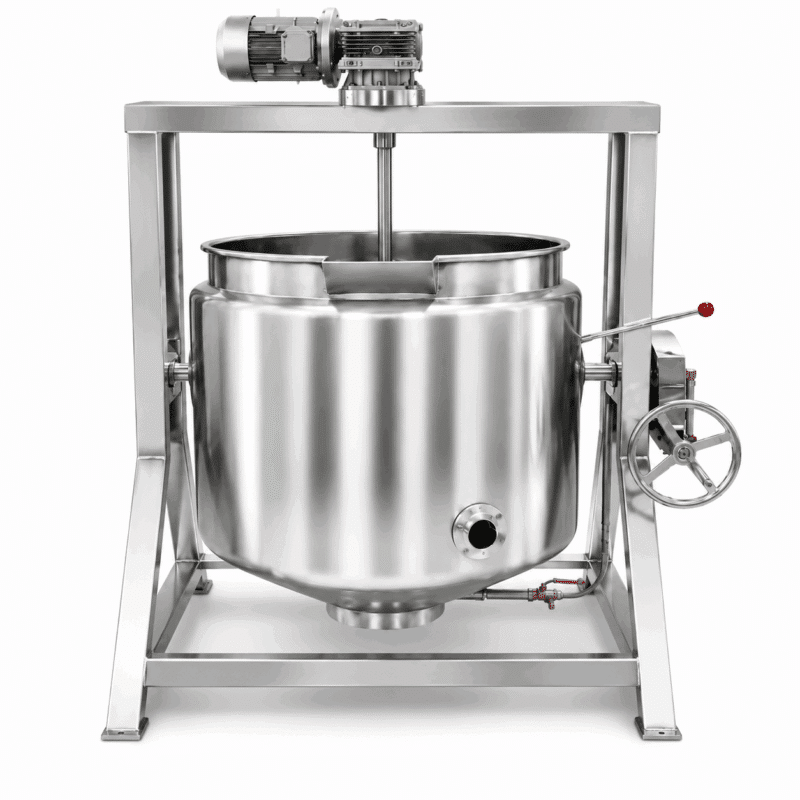
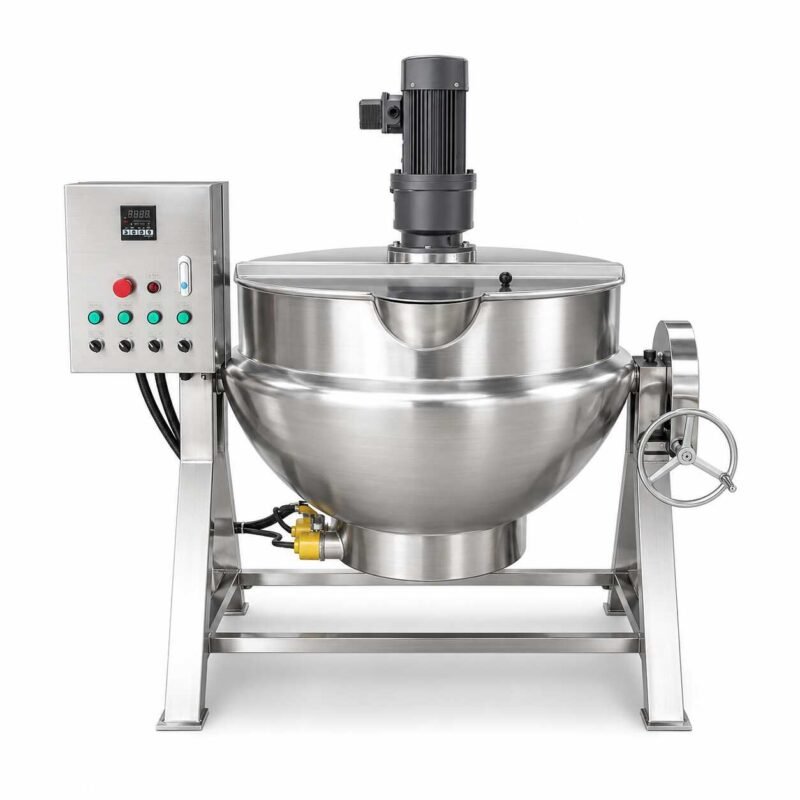
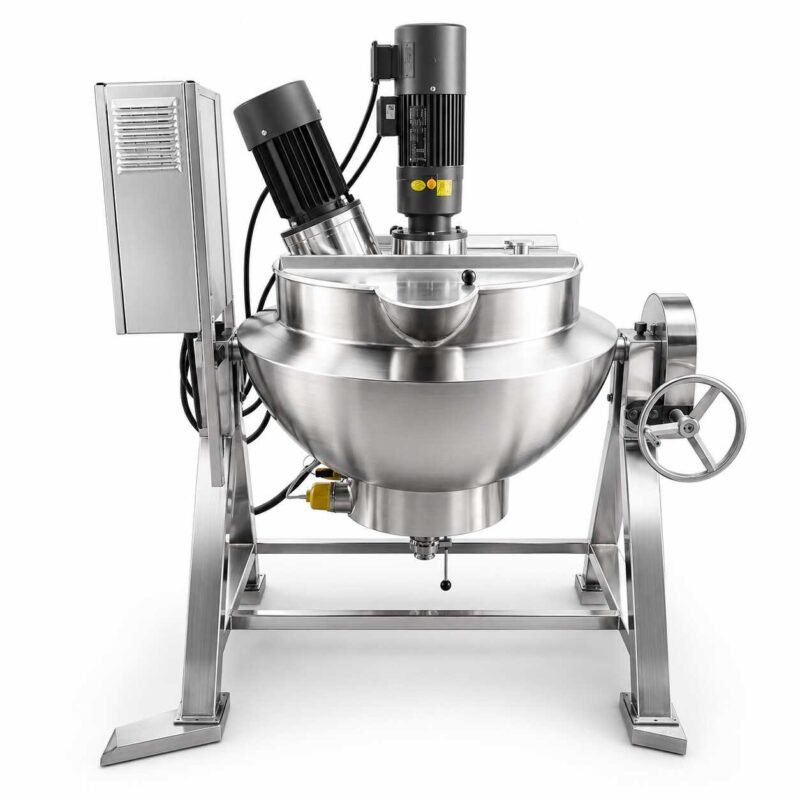
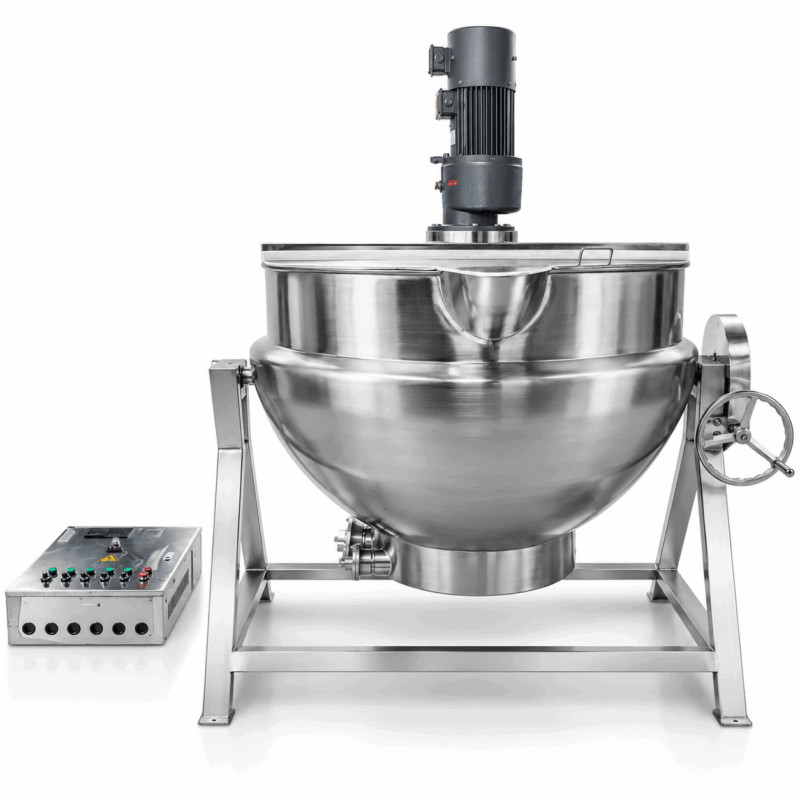
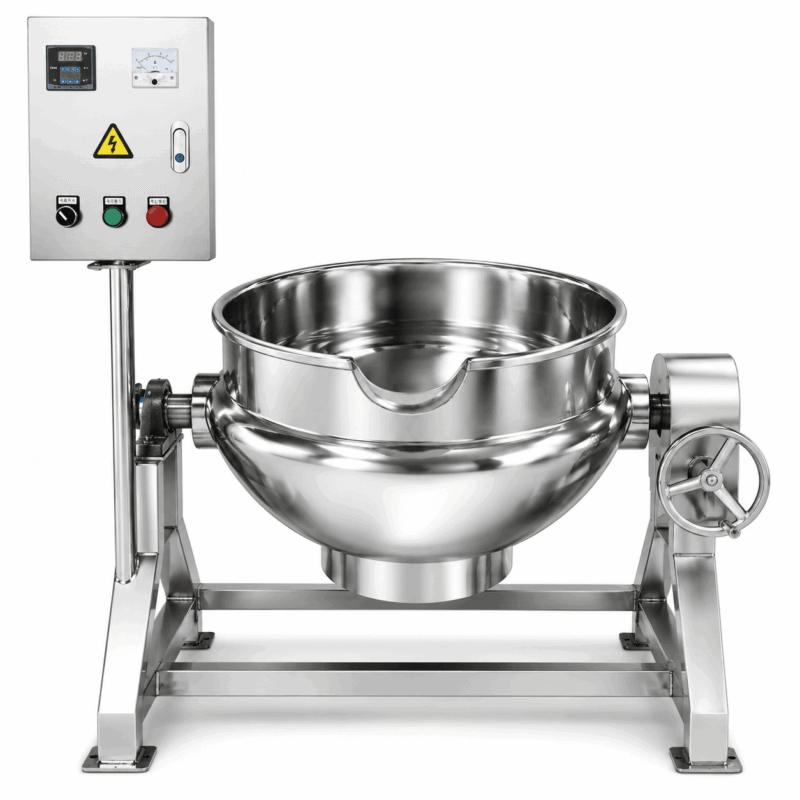
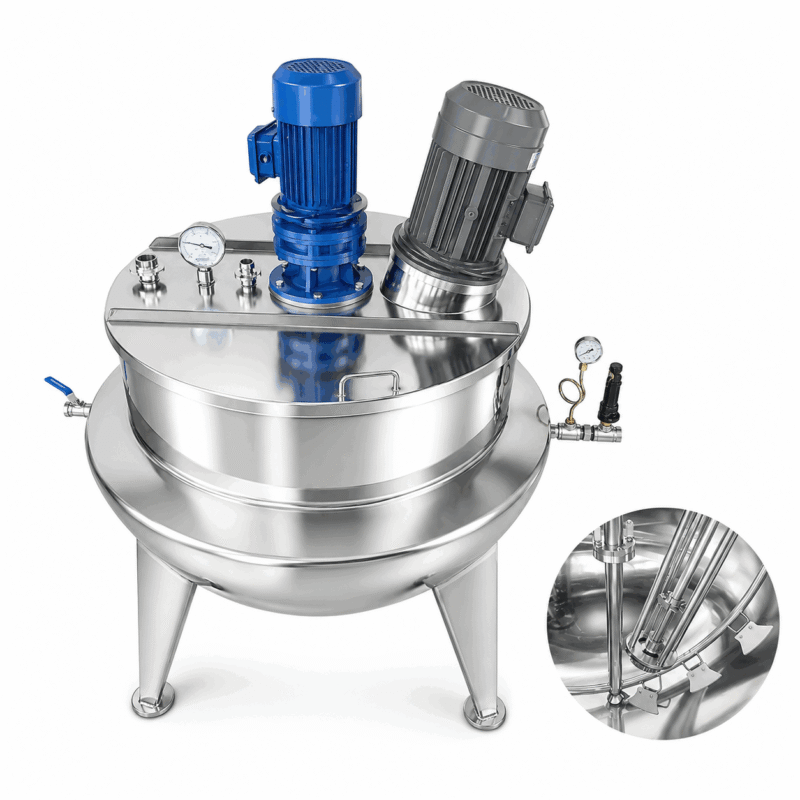
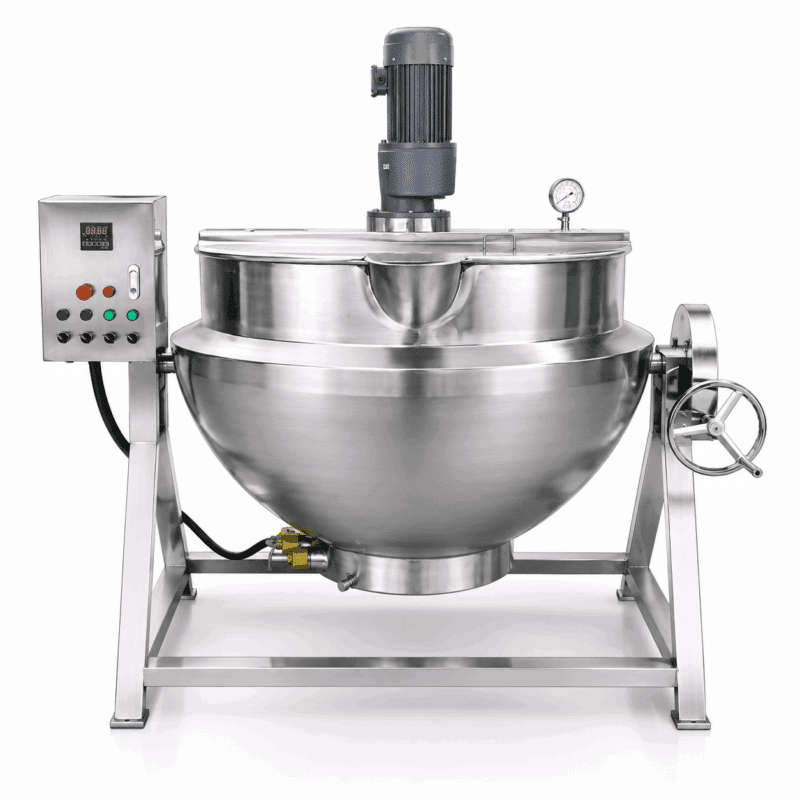
The absence of a motor does not mean limited equipment. In fact, many factories prefer kettles without agitators when the product does not require constant mixing or when the operator performs manual agitation during specific stages.
- Cooking of sauces and concentrates
- Preparation of syrups
- Processing of dairy products
- Dissolution of ingredients
- Blanching and heating of food
- Simple CIP cleaning processes
- Production of low-viscosity cosmetics
In small or semi-automatic lines, a kettle without a motor is usually more reliable in the long term. Fewer components. Fewer failures.
Heating options
Electric heating
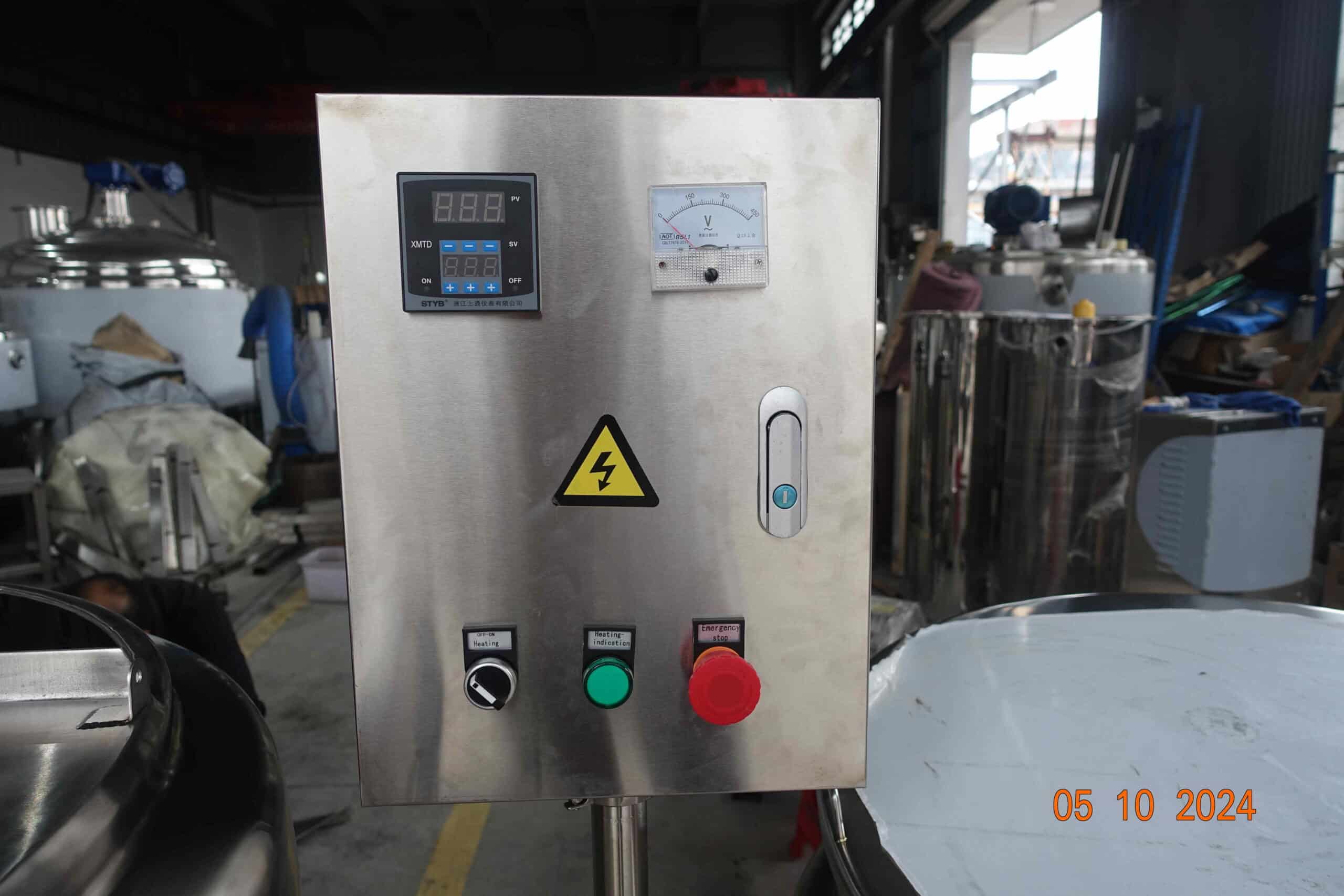
The electrical system offers precise temperature control and a relatively simple installation. It is common in plants with gas restrictions or where a cleaner environment is required.
However, at large capacities, electrical consumption can significantly increase operating costs. It is also important to periodically check the resistances, especially when there is scale buildup or continuous work at high temperatures.
In sensitive processes, electric heating allows reducing overheating points if the internal design of the thermal jacket is well distributed.
Gas heating
Gas remains one of the most used options in food production due to its heating speed and lower energy cost in many regions.
The disadvantage appears when the operator does not properly control the flame. In kettles without motorized agitation, this can cause localized caramelization or product adherence to the bottom.
It is a fairly common problem in thick sauces and sugar-containing mixtures.
It is also advisable to consider the ventilation of the area and burner maintenance. Many buyers underestimate this point until temperature variations appear between batches.
Steam heating
In plants with a central boiler, steam usually offers the most stable and efficient heat transfer. Heat distribution is uniform and reduces the risk of product burning.
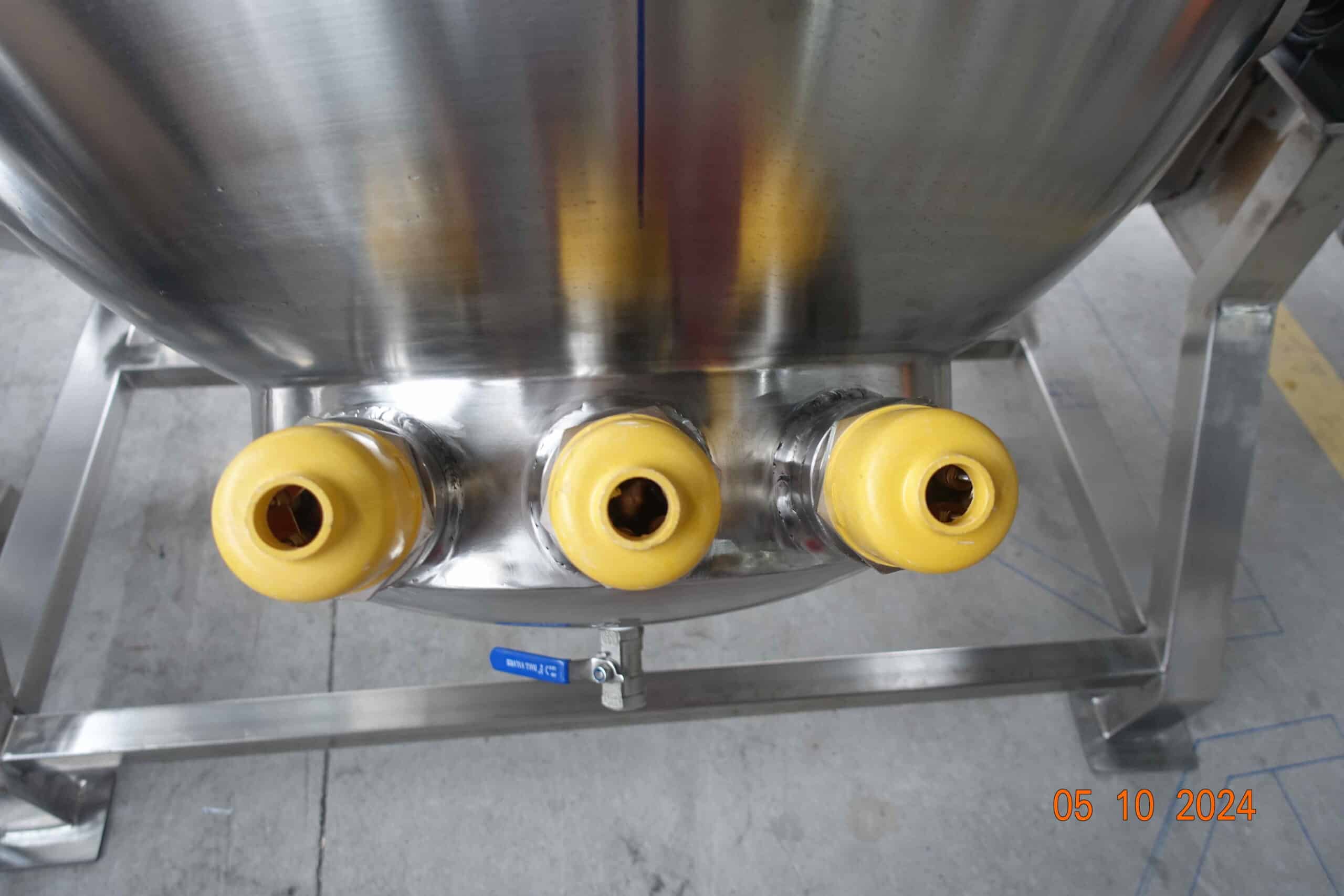
For continuous production, steam is usually the technically strongest alternative, although the initial investment is higher.
A practical observation: if the steam quality is not adequate or there is excess condensate, thermal efficiency drops rapidly and the process time increases more than expected.
Construction in stainless steel 304 and 316L
Stainless steel 304
304 is sufficient for most standard food applications. It has good mechanical performance, reasonable cost, and wide availability of spare parts and accessories.
In environments with moderate chemical cleaning, it works properly for years.
Stainless steel 316L
When the product contains salt, citric acid, vinegar, or other corrosive compounds, 316L offers a considerably longer service life.
It also facilitates sanitary compliance in more demanding processes. Some pharmaceutical and cosmetic plants prefer it even when technically 304 could work.
It is not always necessary to pay the extra cost for 316L. This is one of the most frequent mistakes in industrial purchasing. Selection should be based on the actual product, cleaning method, and operating hours.
Operational aspects that are often overlooked
Thermal transfer without agitation
In kettles without motors, the operator must understand that heat transfer depends greatly on the product's viscosity and the frequency of manual mixing.
Dense products can generate hot spots at the bottom if the process is not properly controlled.
Actual useful capacity
Often a kettle is purchased considering the total volume and not the effective working capacity. In real operation, free space is usually left to avoid spills during boiling or ingredient loading.
A 300-liter kettle rarely operates at a full 300 liters.
Cleaning and maintenance
Models without motors greatly simplify maintenance because they eliminate reducers, mechanical seals, and additional electrical components.
Even so, there are critical points:
- Periodic inspection of sanitary welds
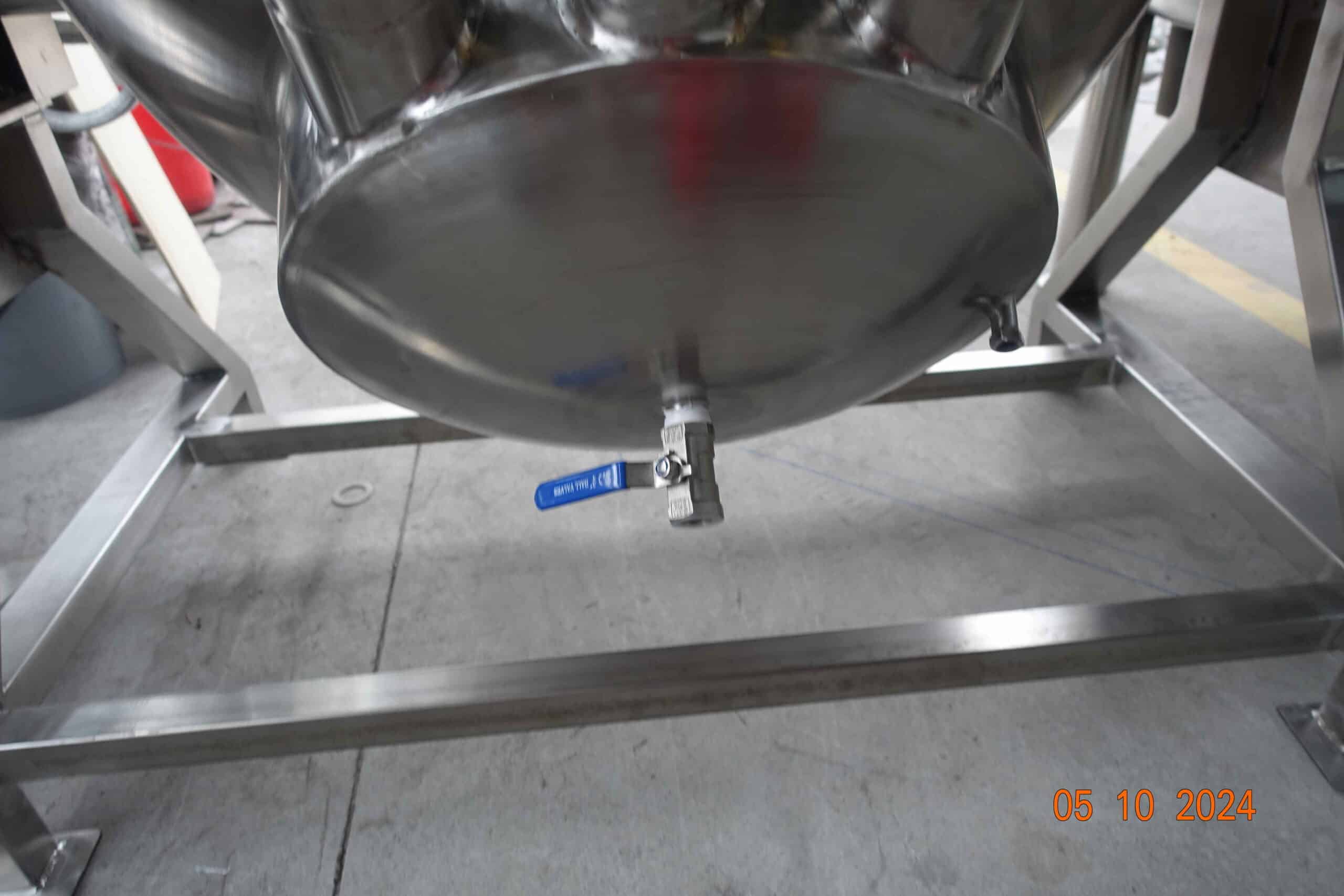
- Discharge valve inspection
- Internal scaling control
- Thermal insulation verification
- Complete cleaning of dead zones
In steam-heated equipment, condensate traps often receive little attention until significant thermal losses occur.
Proper selection according to the process
Not all plants require an automated kettle with continuous mixing and PLC control. In many cases, an industrial kettle without a motor solves the process with lower operating costs and less downtime for maintenance.
The key is to correctly evaluate:
- Product viscosity
- Production frequency
- Available heating type
- Sanitary requirements
- Actual level of automation needed
- Operator availability
When the process is well defined, this type of kettle can operate for years with very few technical interventions.