Construction and materials
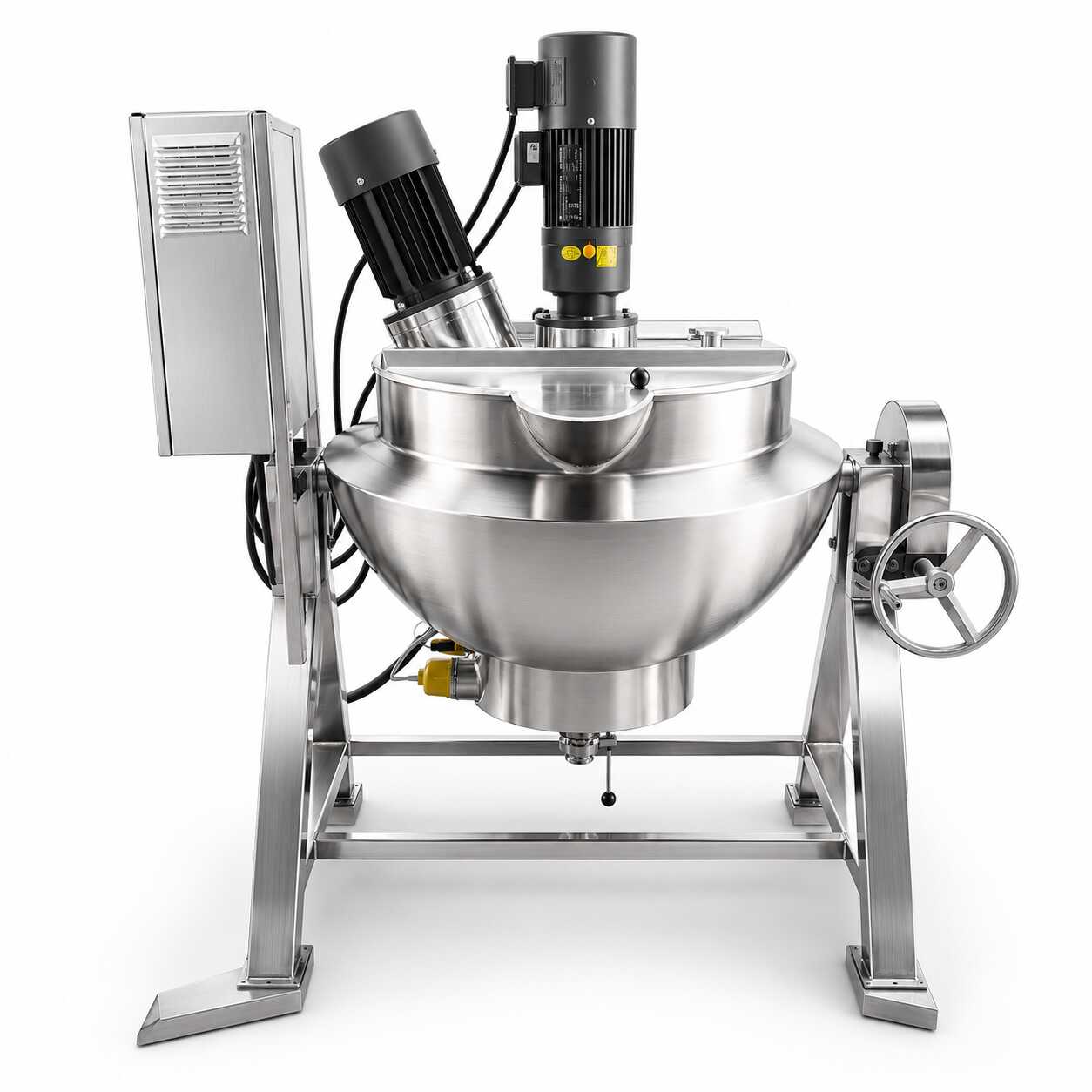
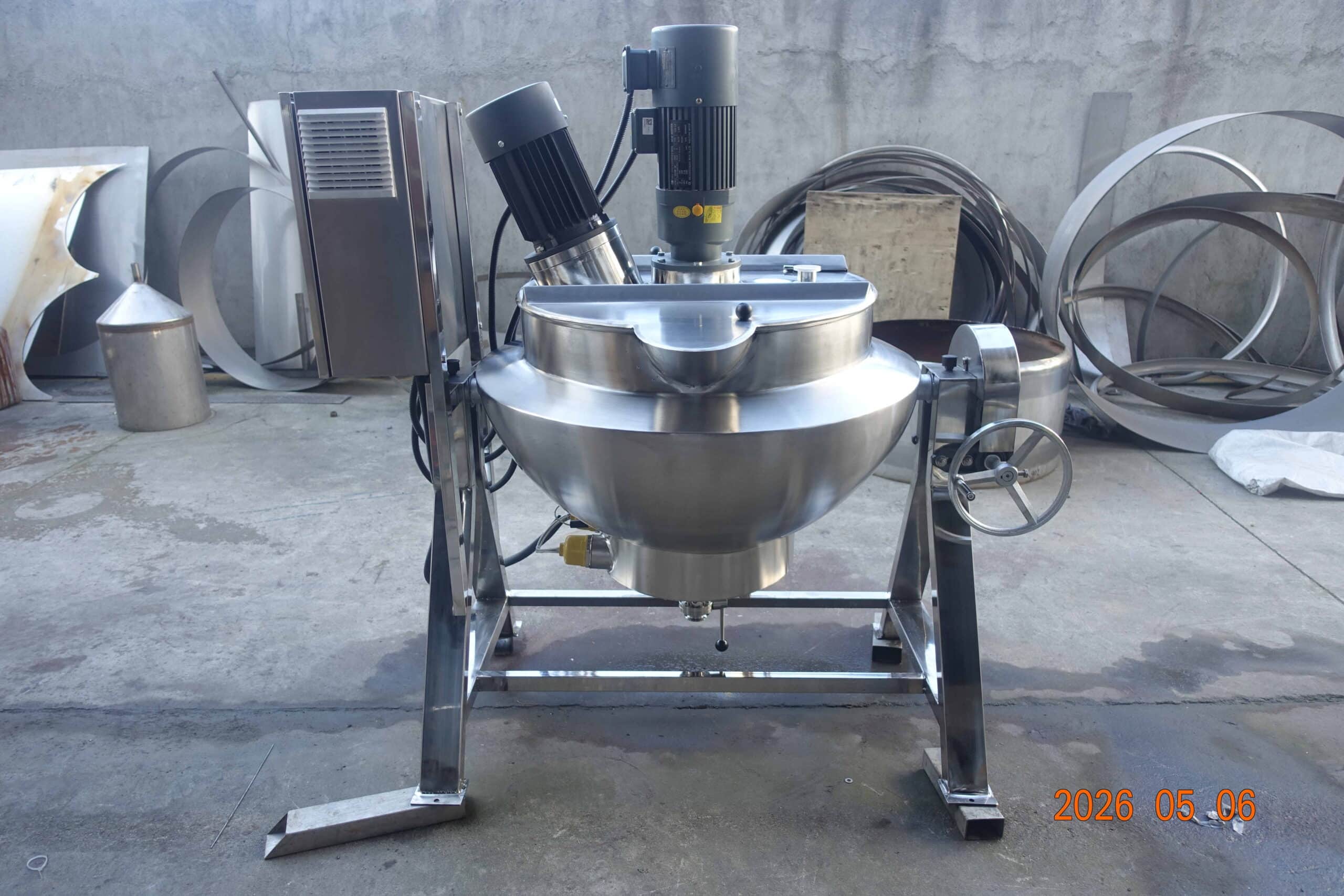
For food, cosmetic, and clean chemical applications, the kettle is usually made of stainless steel 304 or 316L. 304 is sufficient for many neutral or slightly acidic products. 316L is suitable when there is salt, organic acids, chlorides, aggressive cleaning, or stricter sanitary requirements.
In the factory, the choice of material should not be decided solely by price. A 304 tank can work for years without problems in a sweet sauce but may suffer localized corrosion if used with brines, concentrated vinegars, or poorly rinsed detergents. 316L is not miraculous but offers a wider operating margin.
Available capacities
Common capacities range from 50 liters to 1,000 liters. At small volumes, temperature control and emulsification speed are easier to adjust. In kettles from 500 to 1,000 liters, heat transfer, agitator geometry, and product discharge become much more critical.
- 50 to 100 liters: pilot tests, small batches, high-value formulations.
- 200 to 300 liters: flexible production for food, cosmetics, or special products.
- 500 liters: common balance between capacity, handling, and processing time.
- 1,000 liters: industrial production with higher demands on heating, agitation, and cleaning.
Typical plant applications
This type of kettle is used when the process requires heating and mixing without losing control over texture. In products such as mayonnaise, emulsified sauces, cosmetic creams, or dairy bases, the order of loading and temperature are as important as the emulsifier's power.
Food products
- Sauces, ketchup, mustard, and dressings.
- Mayonnaise and oil-water emulsions.
- Fillings, sweet creams, and viscous pastes.
- Syrups, dairy blends, and dessert bases.
Cosmetics and personal care
- Body and facial creams.
- Lotions, gels, and balms.
- Emulsions with oils, waxes, and thickeners.
Chemicals and special processes
- Dispersion of powders in liquids.
- Preparation of technical pastes.
- Blends with variable viscosity during heating.
Heating options
The kettle can be configured with electric, gas, or steam heating. There is no universally superior option. The choice depends on the available infrastructure, energy cost, required thermal precision, and expected production speed.
Electric heating
Electric heating is clean, easy to install, and suitable for plants without boilers. It works well for small and medium capacities. Its main limitation appears in large kettles, where the installed power can be high and the heating time longer if not properly sized.
In electric equipment, it is advisable to review the distribution of resistances and temperature control. A common mistake is to request more power without considering the product's viscosity. Excessive power in a small area can cause local burning, especially in products containing sugar, starch, or protein.
Gas heating
Gas is usually attractive due to operational cost and heating speed. It is practical for cooked foods, sauces, and products where a less precise thermal response is acceptable. It requires good ventilation, stable burners, and attentive operators.
The main disadvantage is control. If the product is sensitive to overheating, gas requires more experience. In many plants, issues such as dark color, cooked flavor, or product sticking to the bottom do not stem from the tank but from a poorly adjusted flame or insufficient agitation at the start of the batch.
Steam heating
Steam is the most robust option for continuous production or large batches. It offers good heat transfer, uniform heating, and quick response if the installation is well designed. It is the preferred alternative in many factories with a central boiler.
But steam does not forgive installation errors. Defective steam traps, poorly drained condensate, or unstable pressure reduce performance and cause water hammer. The kettle may be excellent, but if the steam line is poorly executed, the operator will end up compensating with longer processing time.
Emulsifier and agitation system
The emulsifier works with a rotor-stator or high shear system to generate fine dispersion. It does not replace the wall agitator or scraper when the product is viscous. This is a common misconception. The emulsifier refines; the agitator moves.
Why the combination of agitators matters
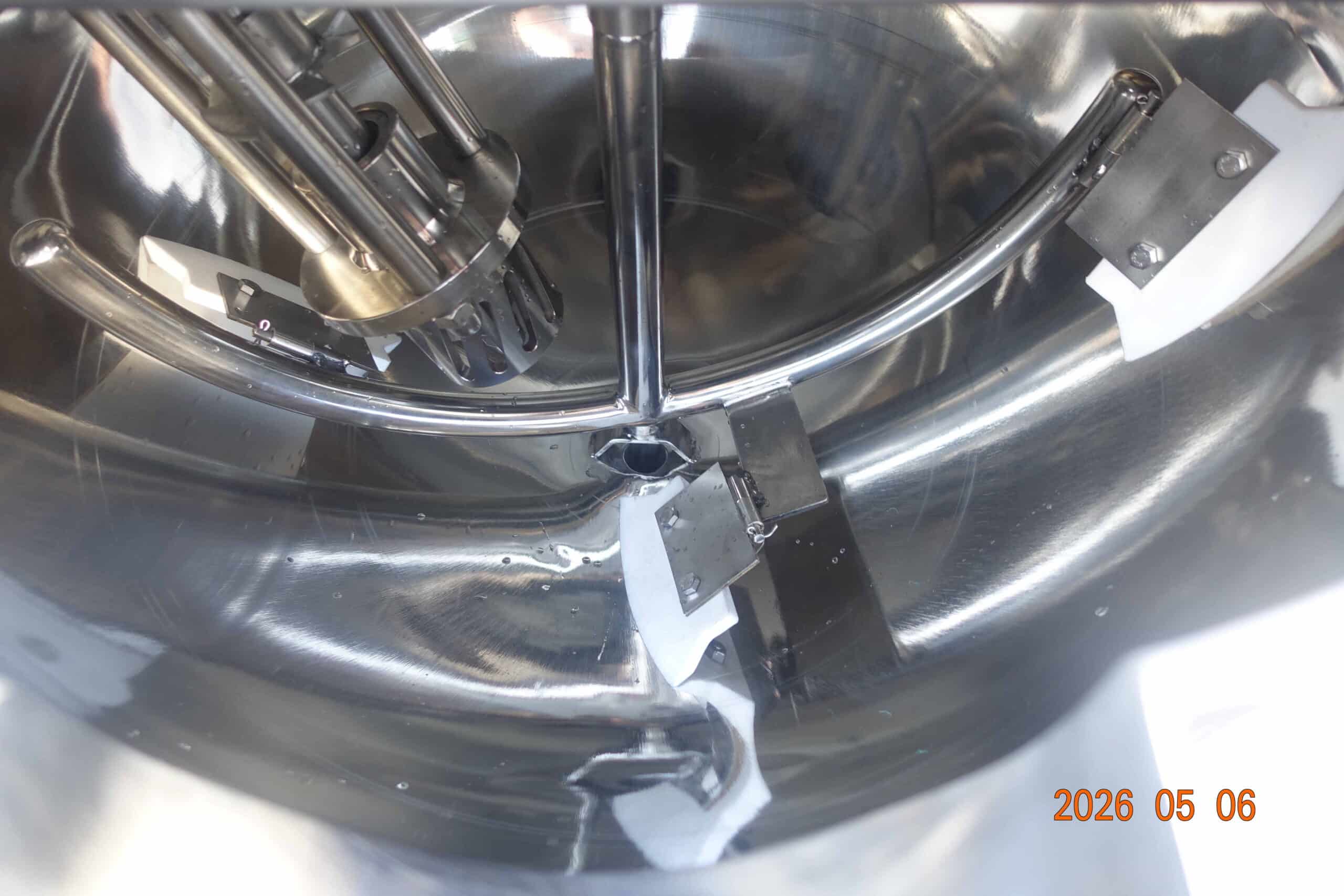
In low-viscosity products, a central emulsifier may be sufficient. In thick products, it is advisable to add anchor-type agitation, paddles, or side scrapers to avoid dead zones and thermal buildup on the wall. Without global circulation, the emulsifier only processes the material passing near its head.
- First, complete batch movement is ensured.
- Then, shear is adjusted to achieve the desired texture.
- Finally, stability, temperature, and total processing time are validated.
An oversized emulsification unit can incorporate air, increase temperature due to friction, or break structures that should be preserved. More speed does not always mean a better product.
Technical details to review before purchasing
Tank geometry
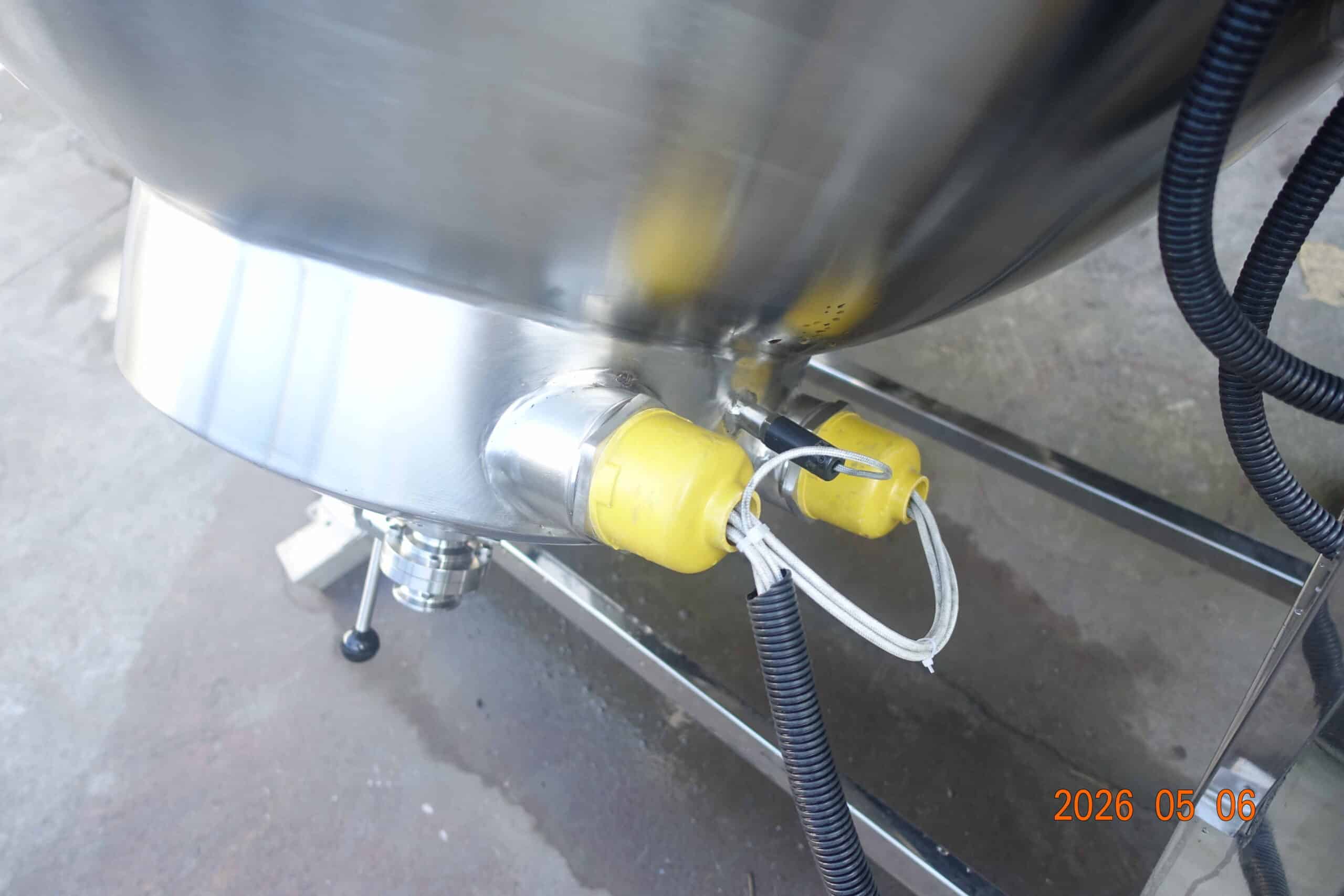
The bottom, diameter-to-height ratio, and emulsifier position directly influence the mixing. A hemispherical or sloped bottom facilitates discharge and reduces residue. In viscous products, poor geometry can leave several liters of product unremoved, which becomes noticeable at the end of the month, not on the technical sheet.
Temperature control
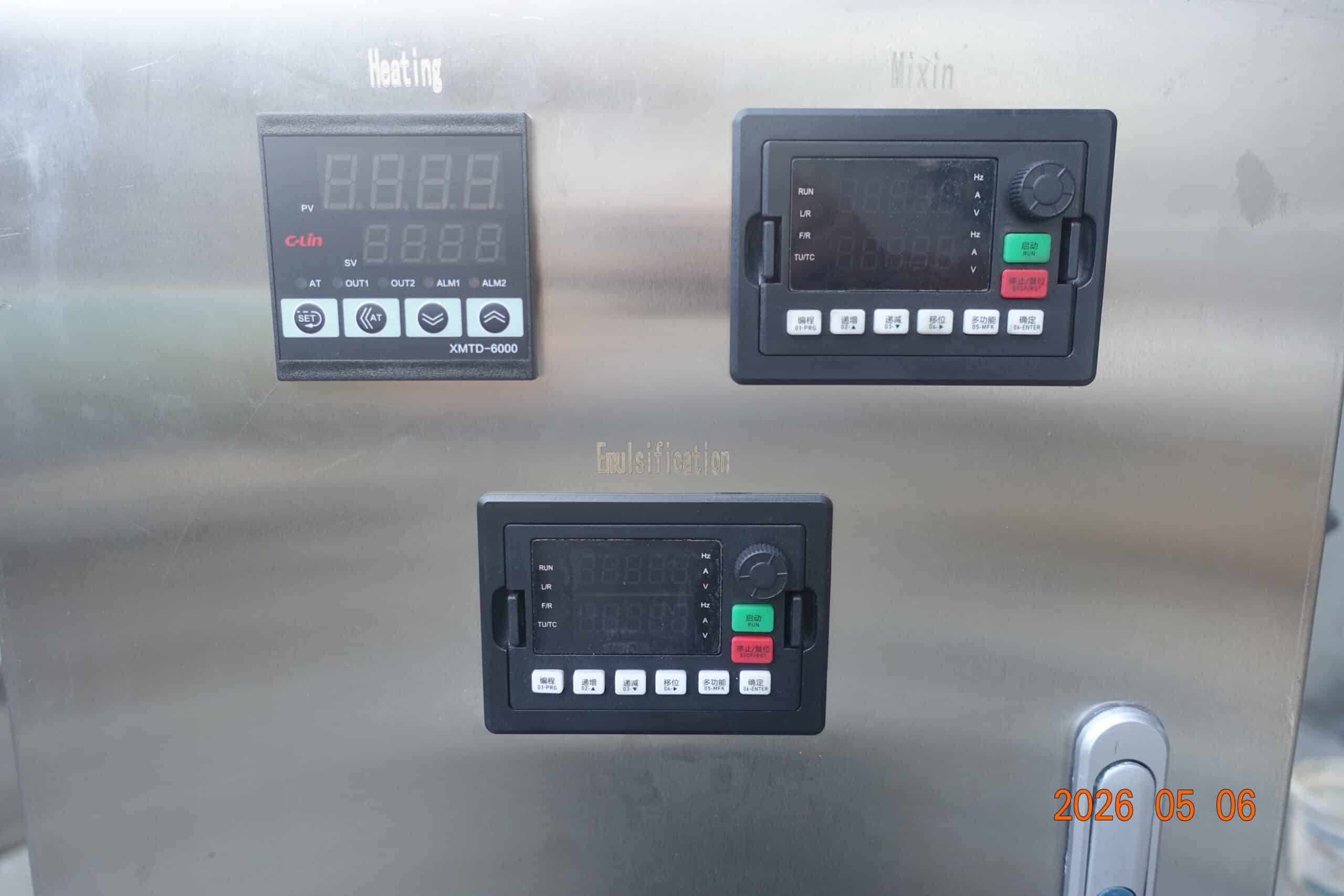
The sensor must be located where it reads the actual product, not just a hot wall or low circulation zone. In sensitive processes, it is advisable to work with staged control: heating, maintenance, and cooling if the design allows.
Sanitary finish
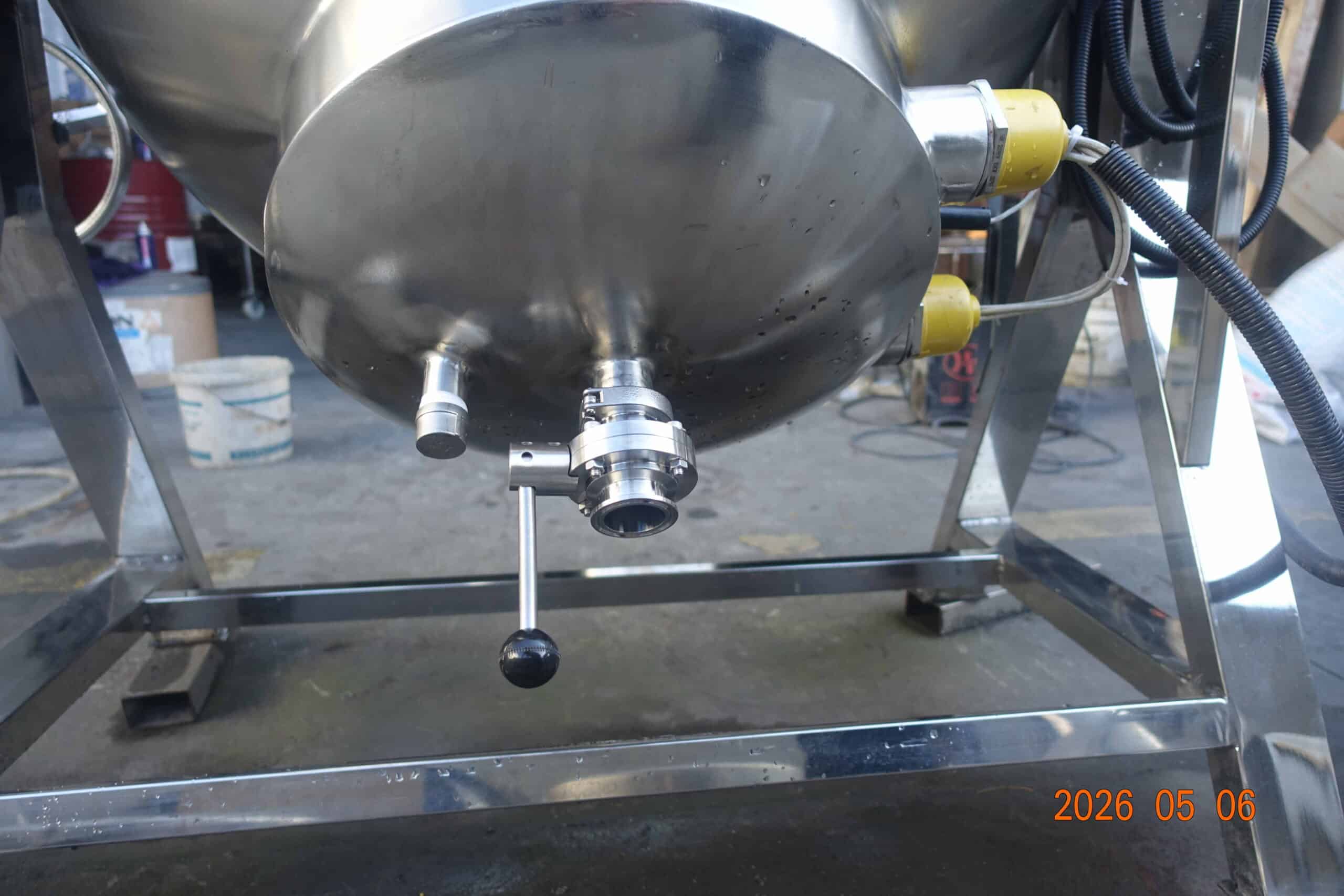
Surfaces in contact with the product must have polished welds, accessible corners, and sanitary connections. It is not enough to say “stainless steel.” In plant audits, problems appear in nozzles, valves, gaskets, covers, and areas where the operator cannot clean properly.
Common operational problems
In daily operation, many failures recur. Most are not serious equipment defects but a combination of recipe, loading sequence, and insufficient maintenance.
- Product burned on the wall: usually caused by excessive temperature, slow agitation, or heating before loading enough liquid.
- Unstable emulsion: may be due to incorrect temperature, poor order of addition, or insufficient shear time.
- Excess foam: usually appears due to air intake, excessive speed, or too low working level.
- Dust clumps: occur when thickeners or stabilizers are added too quickly or without premixing.
- Slow discharge: common in viscous products if the valve, bottom slope, or pump were not considered during design.
Practical maintenance
Maintenance of a kettle with an emulsifier should focus on seals, bearings, motor, transmission system, valves, and internal surface condition. A small leak in the emulsifier seal can contaminate the product or allow liquid to enter the motor. It is not advisable to wait until it makes noise.
Recommended inspection points
- Check mechanical seals and gaskets after intensive cleaning cycles.
- Verify clearances or vibrations in the emulsifier shaft.
- Inspect internal scratches where product may accumulate.
- Check operation of discharge valves and CIP connections if present.
- Clean residues in heating jackets, steam traps, or combustion areas according to the installed system.
A well-maintained kettle maintains repeatability. A neglected kettle forces the operator to manually correct each batch, which ultimately affects texture, yield, and production time.
Common buyer misunderstandings
“The emulsifier replaces the entire mixing system”
No. The emulsifier generates high shear but does not always guarantee complete circulation. For viscous products or those with solids, the main agitator remains essential.
“All stainless steels are the same”
Not true either. 304 and 316L behave differently against chlorides, acids, and cleaning chemicals. Choosing solely based on price can be costly with aggressive products.
“More power always improves the process”
In the plant, more power can mean more foam, unwanted heating, and increased wear. The correct approach is to balance volume, viscosity, expected particle size, and processing time.
“A 1,000-liter kettle works the same as a 100-liter one”
Scaling is not linear. Heat transfer, mixing time, discharge, and cleaning change. A recipe that works in pilot scale may need adjustments when moving to industrial production.
Selection criteria
Before defining the model, it is advisable to review the actual product: viscosity when cold and hot, solids content, thermal sensitivity, batch size, cleaning method, and energy availability in the plant. These data are more valuable than a superficial comparison of capacity and price.
- Define the effective working capacity, not just the total tank volume.
- Select stainless steel 304 or 316L according to product and cleaning requirements.
- Choose electric, gas, or steam heating based on infrastructure and required control.
- Size the emulsifier according to viscosity, dispersion target, and processing time.
- Confirm the type of main agitator and, if applicable, wall scrapers.
- Review ease of discharge, cleaning, and maintenance access.
Technical conclusion
An industrial kettle with an emulsifier is an efficient solution when the process demands heating, mixing, and dispersion in a single piece of equipment. Properly specified, it reduces handling, improves batch consistency, and simplifies operation. Poorly selected, it becomes an expensive tank overly dependent on operator skill.
The right decision is not only about capacity from 50 to 1,000 liters, nor choosing steel 304 or 316L. It lies in understanding how the product behaves inside the tank, how heat is transferred, and the actual level of emulsification the formulation requires. That is the difference between buying a machine and buying a stable process.